

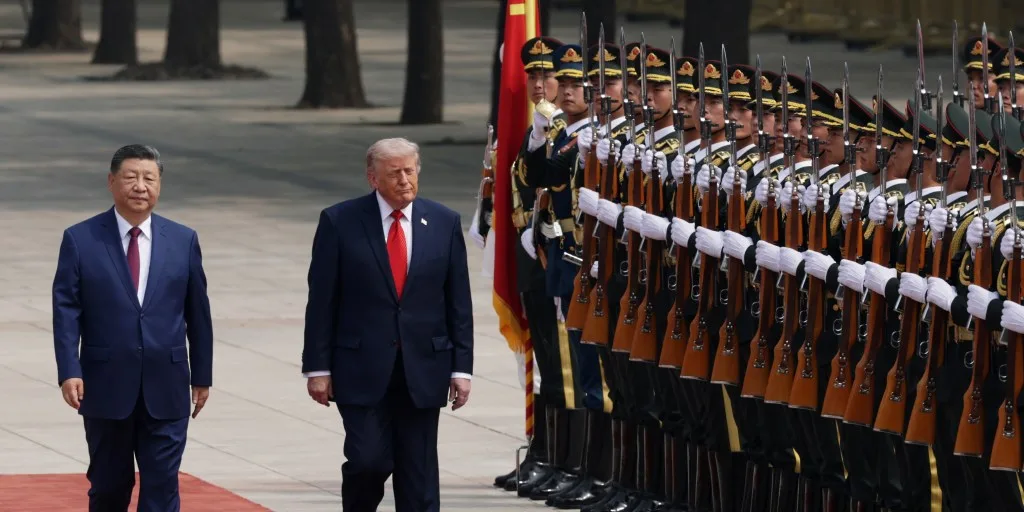
Taiwan’s leadership reaffirmed its sovereignty and democratic independence in response to recent comments by U.S. President Donald Trump, who appeared to question longstanding American policies regarding the island’s defense and future. Trump, following his summit with Chinese President Xi Jinping, expressed uncertainty about proceeding with a large arms sale to Taiwan and suggested the U.S. is not seeking a conflict over the self-governing democracy.
During a public event marking the 40th anniversary of his party’s founding, Taiwan’s President Lai Ching-te highlighted that “Taiwan independence” means the island does not belong to, nor is subordinate to, Beijing. Emphasizing that only the Taiwanese people can determine their destiny, Lai refrained from directly addressing Trump’s statements and avoided answering repeated questions from reporters about U.S.-Taiwan relations.

The Taiwanese Foreign Ministry reinforced this position, declaring Taiwan a “sovereign and independent democratic nation,” explicitly denying any subordination to the People’s Republic of China. This response follows Chinese President Xi Jinping’s framing of Taiwan as the “most important issue” in China-U.S. relations, warning of potential clashes if not managed carefully—comments that reflect Beijing’s long-standing threat to use force to reclaim Taiwan if necessary.
Trump’s remarks during his China visit introduced a degree of ambiguity about U.S. commitments. He indicated he had not yet decided whether to approve an arms package valued at approximately $14 billion, stating that he planned to consult with President Lai before making a final call. Trump also conveyed reluctance to intervene militarily in the event of a Chinese invasion, citing the logistical challenge of sending forces thousands of miles to fight and expressing hope that tensions would “cool down.”
This stance contrasts with the traditional American approach of “strategic ambiguity,” which leaves open the question of whether the U.S. would defend Taiwan militarily. While the U.S. maintains no formal diplomatic relations with Taiwan, it remains the island’s principal arms supplier and international supporter, a role that frequently sparks diplomatic pressure from China.
Despite the pointed language from Trump and Xi, U.S. officials have reassured that official policy toward Taiwan has not shifted. However, these recent developments have raised concerns among Taiwan’s leadership and its allies, amid ongoing efforts to navigate delicate cross-strait relations without escalating tensions.