

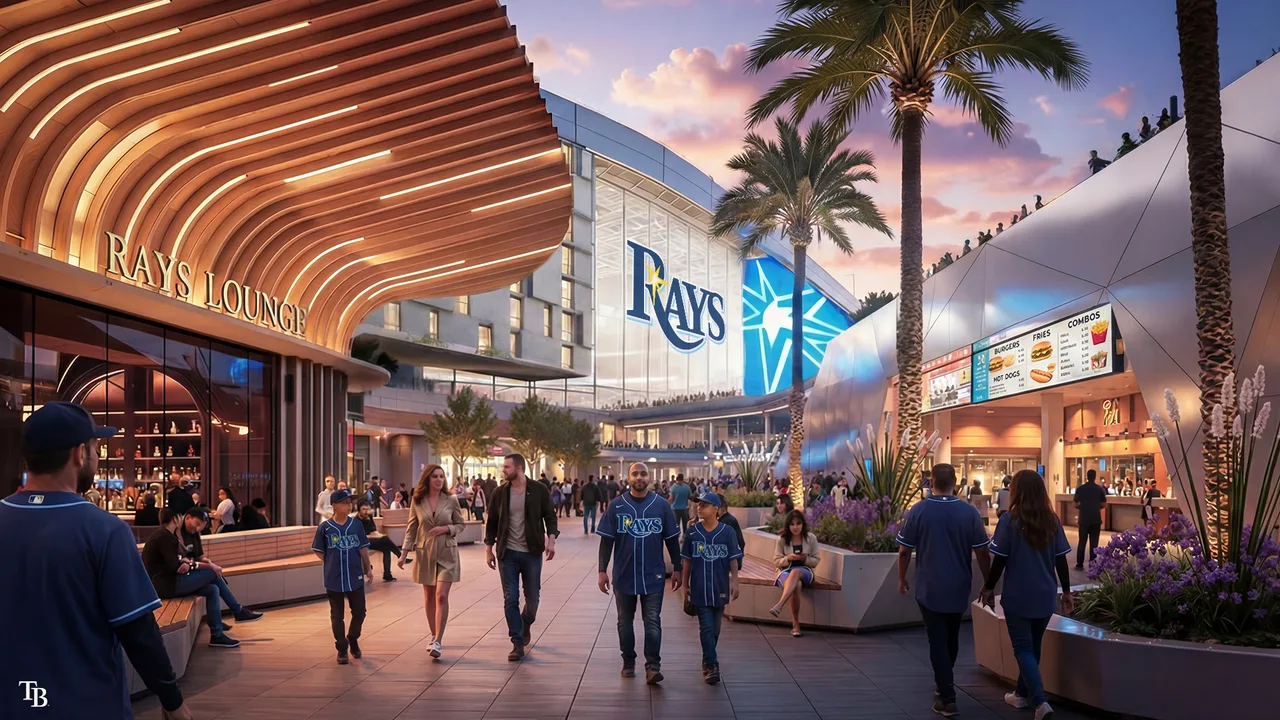
Tampa City Council took significant steps toward funding a new stadium for the Tampa Bay Rays by approving a combined $180 million from city resources. The first portion includes $80 million allocated from the city’s Community Investment Tax, a half-cent sales tax scheduled to renew in December. A separate $100 million was approved from the Drew Park Community Redevelopment Area, expected to cover upfront costs and be repaid through future property tax growth within the redevelopment zone.
This city funding follows Hillsborough County’s recent approval of a nearly $800 million contribution to the stadium project, which brings public investment to nearly $1 billion combined. The total project is estimated at $2.3 billion, with the Rays shouldering over $1 billion and any additional cost overruns. The lands for the proposed stadium will be leased for 99 years by Hillsborough College, which also plans campus development backed by state budget funds.

The approvals come as part of a nonbinding memorandum of understanding (MOU), allowing continued negotiation on several outstanding issues. These include funding responsibilities for maintenance, monitoring construction quality and costs, and conditions protecting the city if private commercial developments tied to the stadium do not materialize. The MOU also anticipates retail, hospitality, and office space as part of the broader redevelopment on college land.
Supporters argue the stadium will sustain Major League Baseball’s presence in the Tampa Bay area while spurring redevelopment in the Drew Park region and generating new economic activity around Hillsborough College. Critics caution the steep public financial commitment could put taxpayers at excessive risk, particularly given the project's scale and uncertainty surrounding its economic returns.
County officials assured that existing public safety projects would remain shielded from funding impacts and indicated that the stadium must be included in eligible projects under the Community Investment Tax framework approved by voters in 2022—a process requiring public hearings to ensure legal compliance.
Despite Thursday’s votes, the stadium deal remains subject to further negotiation and final agreements. The MOU’s nonbinding nature keeps doors open for revisions as stakeholders seek to address financial, operational, and community concerns before proceeding.