

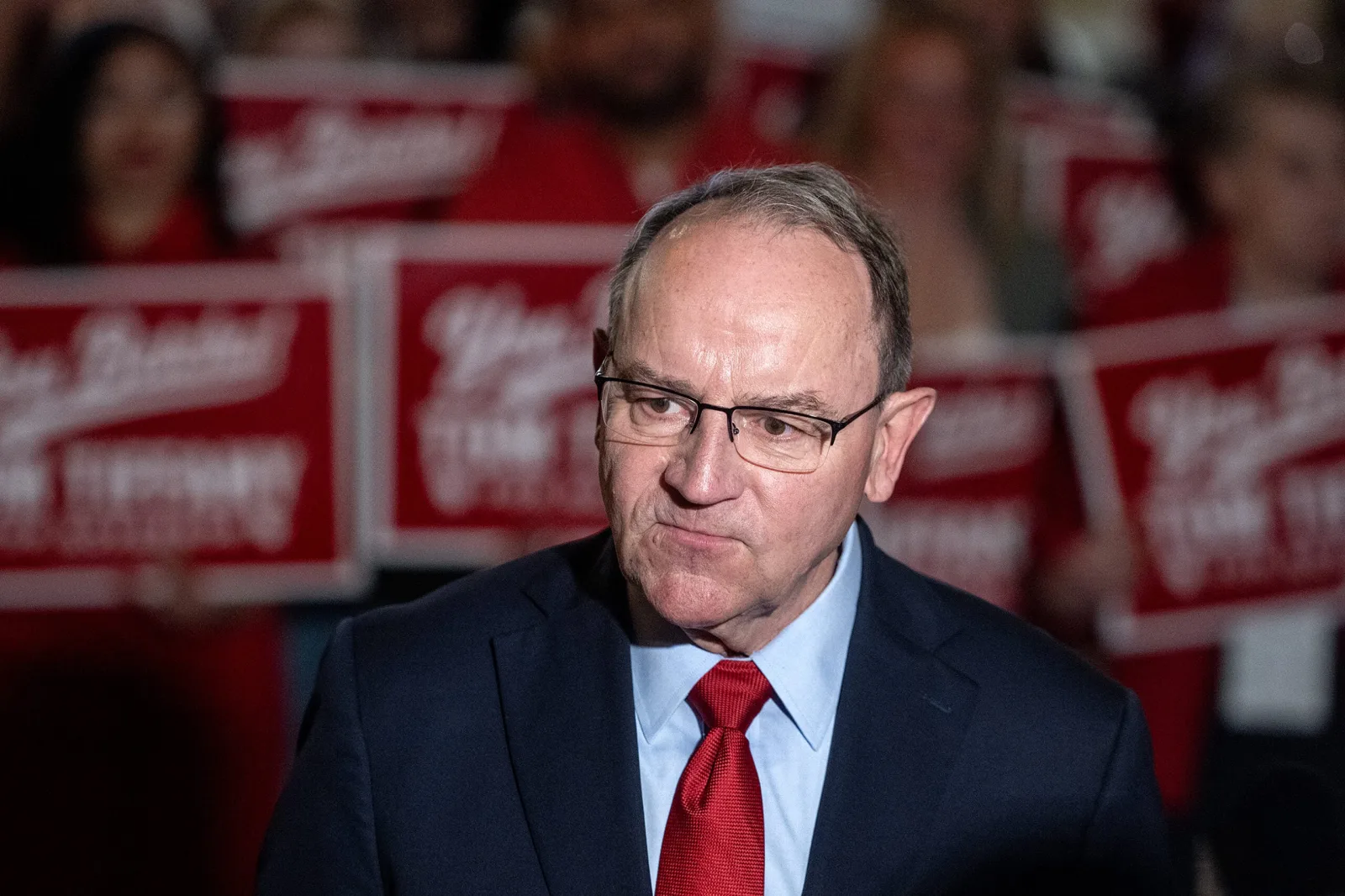
Tom Tiffany, a leading Republican candidate for Wisconsin governor, reaffirmed his criticism of the bipartisan budget surplus allocation plan that recently failed in the state Senate. He argued that the entire surplus should be returned directly to taxpayers rather than divided into a combination of tax rebates, property tax relief, and special education funding.
The plan, crafted between Democratic Governor Tony Evers and Republican legislative leaders, faced broad public support, including among Republicans, Democrats, and independents, according to a recent Marquette University Law School poll. Despite this, the Senate rejected the proposal, with Tiffany emerging as a vocal opponent, reportedly contacting fellow Republican senators ahead of the vote to express his concerns.

Tiffany said he supports certain aspects of the failed deal, such as eliminating taxes on tipped wages and overtime income and issuing rebate checks to residents. However, he has yet to finalize detailed proposals for cutting property taxes, which are a major concern for many Wisconsin homeowners. He singled out Governor Evers’ so-called "400-year veto" from three years ago, which extended school revenue limits for centuries, as a key reason property taxes continue to rise. Tiffany linked this veto, combined with community referendums and state underfunding of education, to escalating tax burdens.
Rejecting recent claims that the surplus deal would plunge Wisconsin into a multi-billion-dollar deficit, Tiffany dismissed such warnings as miscalculations. He stressed that it is possible to both return surplus funds to taxpayers and maintain a balanced state budget by distinguishing between essential and nonessential spending. He outlined that essential expenses would cover education, transportation, and health care, while details on nonessential spending would be revealed in his upcoming budget plans.
Beyond fiscal matters, Tiffany briefly touched on additional policy areas likely to be part of his gubernatorial platform, including investment in data centers and stewardship programs, reflecting issues he has engaged with during his time representing Wisconsin’s 7th Congressional District and previous years in the state legislature.