

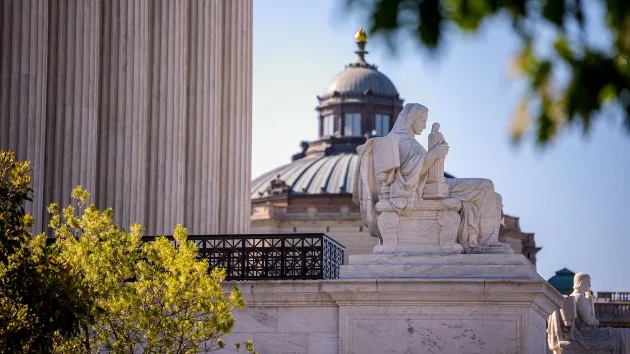
Donald Trump publicly rebuked Justices Neil Gorsuch and Amy Coney Barrett for their roles in a Supreme Court decision that invalidated key parts of his tariff policy. The ruling found that the president lacked authority under the International Emergency Economic Powers Act (IEEPA) to impose broad tariffs, a centerpiece of Trump’s economic strategy.
The Supreme Court, in a 6-3 ruling authored by Chief Justice John Roberts, emphasized the limited scope of judicial power under Article III of the Constitution. Roberts wrote that the IEEPA does not give the president the power to enact tariffs, thereby striking down much of Trump’s sweeping tariffs imposed during his second term. Justices Clarence Thomas, Brett Kavanaugh, and Samuel Alito dissented, arguing in favor of presidential authority during national emergencies.

Trump criticized Gorsuch and Barrett on his social media platform, highlighting that they were his appointees but accused them of harming the country with their decision. He claimed the ruling cost the United States a large financial setback, specifying that billions might have to be repaid to foreign entities and companies allegedly exploiting the U.S. He suggested a simple fix—a brief phrase in the ruling exempting funds paid to the U.S. from repayment—but questioned why the justices did not include such a clause.
This rebuke extends earlier criticism Trump directed at the federal judiciary, particularly targeting Gorsuch and Barrett for rulings he deemed biased against his administration. Despite these attacks, both justices have been regarded as consistent conservative votes favoring Trump's legal positions, with Barrett authoring a significant 6-3 opinion restricting lower courts’ power to issue nationwide injunctions against executive policies.
Justice Gorsuch responded to the criticism in an interview, affirming his commitment to judicial independence and fearless decision-making regardless of political pressure or personal attacks from the president who appointed him.
Trump’s comments also hinted at his frustration with Republican-appointed justices ruling against a Republican president’s agenda, suggesting they should not do so and speculated that the Democrats no longer need to expand the Supreme Court. He stated that, ironically, he might be the one advocating to “pack the court” himself given his disappointment with the conservative justices’ actions.