

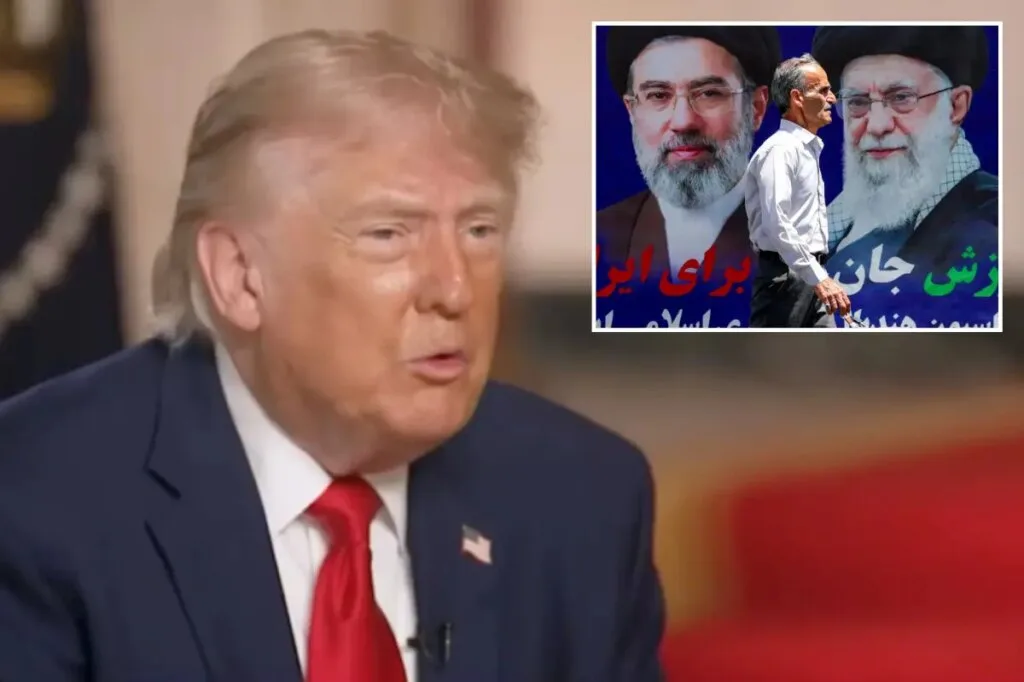
President Trump declared that reaching a deal with Iran is not urgent, underscoring that ensuring Tehran never obtains a nuclear weapon remains his administration’s primary focus. Speaking on Fox News’s “My View with Lara Trump,” he stressed that hasty negotiations risk producing a flawed agreement, even as lower gasoline prices might benefit from a quicker resolution.
Trump outlined several conditions he says Iran must meet, including permanent commitments to forgo nuclear weapons and reopening the Strait of Hormuz for unrestricted shipping. He insisted that Iran must immediately remove all naval mines in the strait, beyond those already cleared by U.S. forces using advanced mine-sweeping technology. The Strait of Hormuz is a strategic maritime passage critical to global oil transit.

The president also referenced ongoing efforts to neutralize underground enriched nuclear material—referred to as “nuclear dust”—which he claims is buried beneath collapsed terrain destroyed by a previous U.S. bombing campaign. He said the United States, alongside China and with the cooperation of Iran and the International Atomic Energy Agency, is capable of extracting and destroying this material.
On the diplomatic front, Trump warned that failure to meet these demands would result in an alternative, presumably more forceful, outcome. He indicated that his administration was actively reviewing the final terms of a potential agreement in the White House Situation Room, signaling a cautious but firm stance.
Supporting the president’s position, Secretary of Defense Pete Hegseth reiterated that any deal with Iran must be comprehensive and uphold the goal of denying Tehran nuclear capabilities, a policy maintained consistently over decades. He warned that if diplomatic efforts fail, military options remain on the table. Hegseth framed the current negotiations as a last opportunity for Iran to comply or face consequences from the Defense Department.
Trump’s statements reflect ongoing tensions in U.S.-Iran relations, centered on nuclear non-proliferation and regional security. The international community closely watches these developments due to their potential impact on global stability and energy markets.