

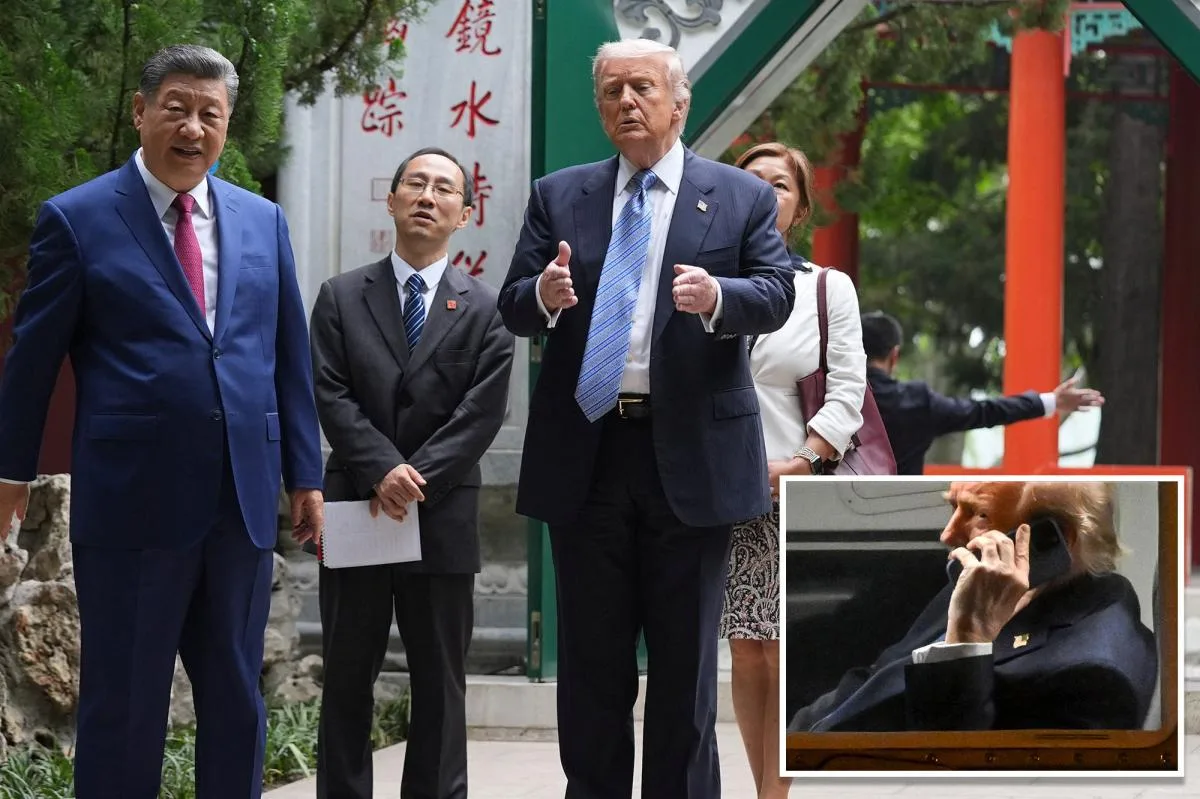
President Trump faced significant communication challenges during his summit in China as strict cybersecurity protocols prevented him and his delegation from using personal electronic devices. These measures aimed to safeguard sensitive information from potential hacking, leaving the president without his usual access to his personal cellphone.
To mitigate the risk, White House staff resorted to using burner phones and sanitized email accounts, stripped of most apps and functions, ensuring minimal data exposure in case of cyber breaches. Meanwhile, the president’s personal devices were securely stored in specialized Faraday bags aboard Air Force One—shielding them from all wireless signals and maintaining data security until the delegation returned to American soil.

This digital lockdown extended beyond Trump himself; the entire presidential entourage adapted to the constraints, with many communications and social media posts during the summit managed remotely from Washington. The State Department has long warned that privacy cannot be expected on electronic networks in China, prompting officials and travelers alike to bring devices void of sensitive personal data.
The summit involved intense discussions between President Trump and Chinese leader Xi Jinping, covering complex geopolitical topics such as the Iran conflict, Taiwan’s status, trade negotiations, and technology issues. Despite the heavy agenda, the two presidents also took time to reinforce their personal rapport through ceremonial events, including a state banquet and cultural tributes, highlighting the multifaceted nature of the high-profile meeting.