

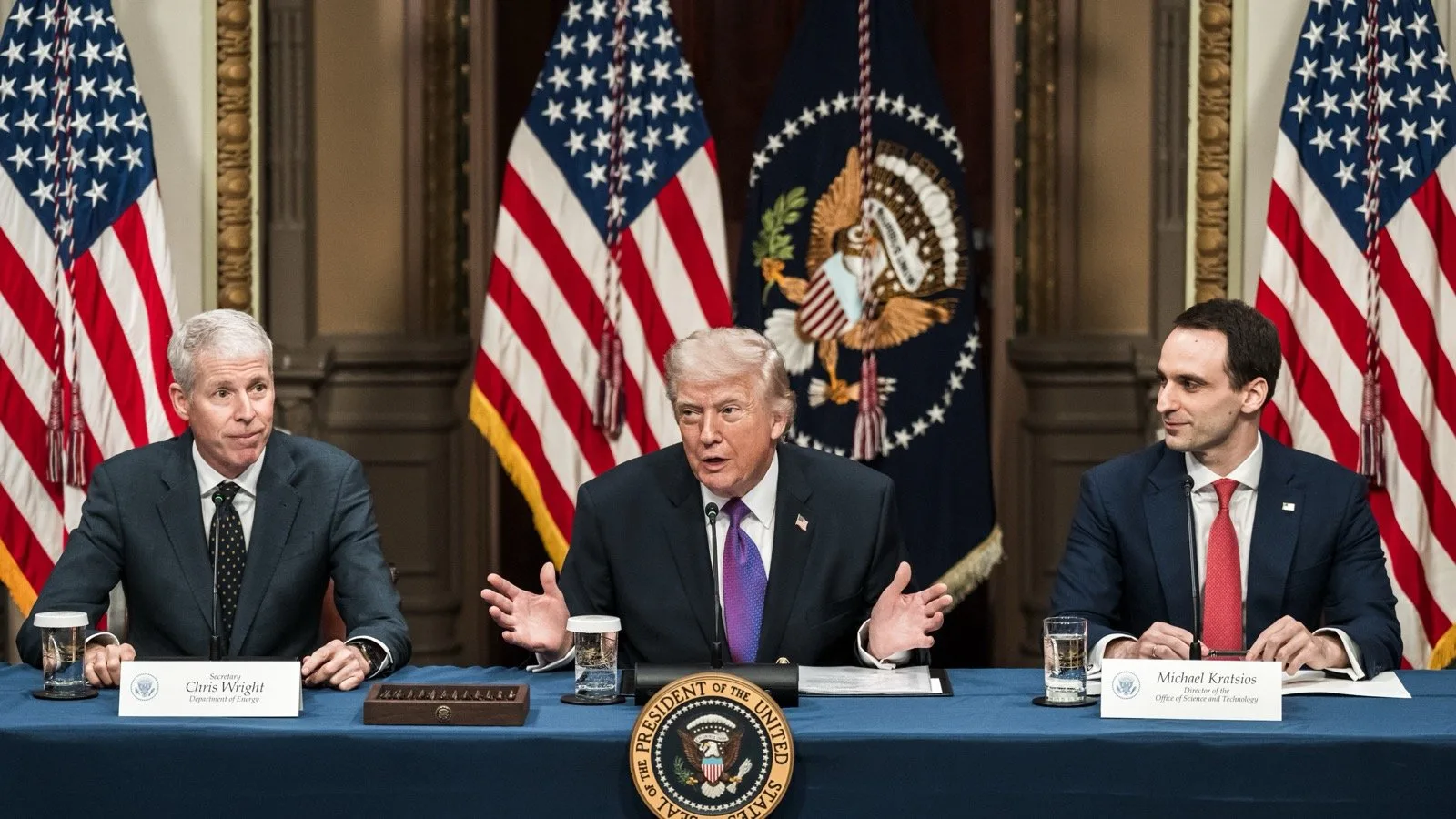
President Trump has introduced a proposal that could shift the distribution of wealth generated by artificial intelligence. He suggested that if AI becomes an economic powerhouse, American citizens might deserve a direct financial stake in the industry’s success rather than profits being confined to Silicon Valley and Wall Street investors.
This concept emerged alongside significant moves by the White House toward securing and advancing AI technologies within national defense. The administration has recently signed a National Security Presidential Memorandum that establishes a framework to deliver cutting-edge, secure AI tools to U.S. military and intelligence personnel.

The memorandum mandates rapid adoption of advanced AI models from various providers and pushes for expansion of high-security computing infrastructure to support these systems at scale. It also calls for the formation of a National Security Strategic Reserve comprised of top AI experts outside the government, aimed at strengthening the talent pipeline.
Significantly, the directive requires an updated set of rules governing autonomous weapon systems and stipulates an annual review of national security AI guidelines to keep pace with technological developments. It also restricts any modification, degradation, or disabling of AI systems relied upon by American warfighters without explicit prior consent.
Alongside these defense-oriented initiatives, President Trump indicated plans for upcoming discussions with AI industry leaders to explore the possibility of public-private partnerships that could provide the American people with equity stakes or profit-sharing arrangements in major AI companies. This marks a notable shift in thinking, questioning the current model whereby the economic benefits of AI innovation flow almost exclusively to corporate insiders and investors.
As AI continues to be framed as a transformative force affecting the economy, labor, and national security, this proposal suggests a drive to broaden the financial benefits to the general population.