

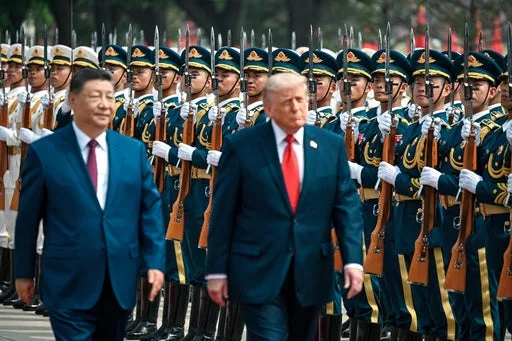
Following a series of critical discussions in Beijing, President Donald Trump has not yet decided whether to approve a major U.S. arms sale to Taiwan, a focal point of tension between Washington and Beijing. The outcome of this decision carries significant implications for U.S.-China relations and regional security in East Asia.
During meetings with Chinese President Xi Jinping, Trump and Xi covered a range of urgent issues, including trade disputes, technological competition, the conflict in Iran, and Taiwan’s status. Xi underscored Taiwan as China’s paramount concern, warning Trump that unresolved disagreements over the island could escalate into direct clashes or conflict. Taiwan is a self-governed democratic territory claimed by China as part of its sovereign domain, making arms sales from the U.S. a particularly sensitive matter.

On Iran, Xi pledged that China would support diplomatic efforts to end the ongoing war and facilitate the reopening of the Strait of Hormuz, a vital global shipping route. Trump expressed optimism that China, as Iran’s largest trading partner, might leverage its economic ties to pressure Tehran into concessions favorable to the U.S. Xi further assured Trump that China would refrain from supplying Iran with military equipment, a key concern in Washington’s strategy to isolate Tehran.
While the two leaders asserted progress in stabilizing their bilateral relationship, deep-seated differences persist. The talks took place amid broader geopolitical pressures, including ongoing U.S. troop adjustments in Europe and diplomatic efforts involving Israel and Lebanon. Trump’s visit to Beijing highlighted the complex balancing act facing U.S. foreign policy as it navigates rivalry and cooperation with China.