

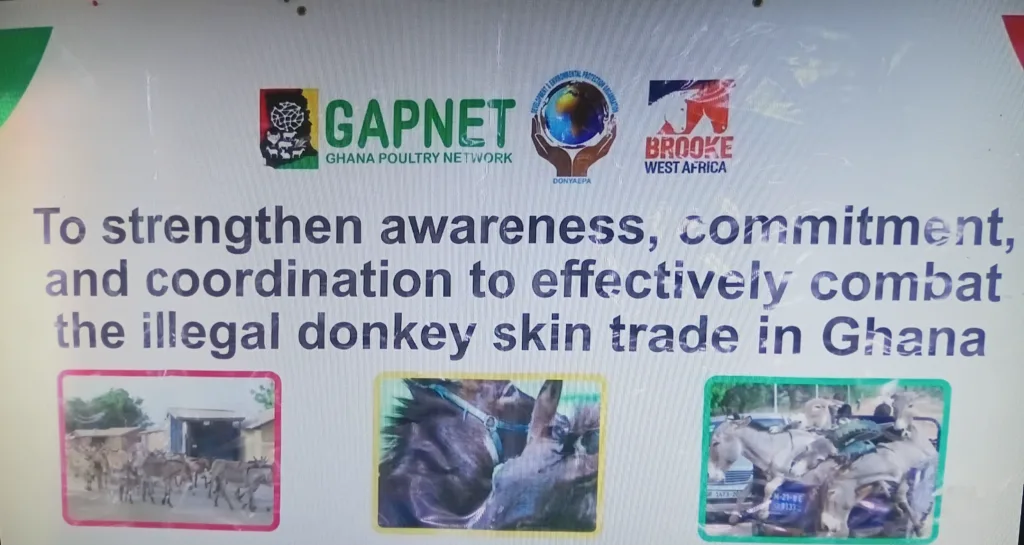
Animal welfare advocates are calling for immediate government action to halt the illegal trade in donkey hides across Ghana, citing concerns that the country’s donkey population could vanish without stronger protective measures. The growth of this illicit activity in northern Ghana has raised alarms about the future of these animals, vital to rural economies and daily survival.
Donkeys serve essential roles in many Ghanaian communities, particularly in the north where they support farming, transport, and manure production. Advocates highlight that these animals are integral to local livelihoods and that their loss would have severe repercussions. Cultural beliefs in some northern regions also complicate efforts to protect donkeys, with some communities reluctant to treat sick animals, viewing their health as a matter governed by spiritual forces rather than veterinary care.

Activists affiliated with the Fight Against Donkey Extinction (FADE) project emphasize that laws prohibiting the trade in donkey products already exist at regional and continental levels, having been passed by ECOWAS and the African Union. Since Ghana is a member of both bodies, advocates insist the government has an obligation to implement and enforce these regulations effectively to prevent further slaughter.
The international demand for donkey hides, which fuels the illicit market, threatens not only the animals but also the economic stability of communities that depend on them. Animal welfare groups warn that without urgent intervention, the loss of donkeys will devastate rural livelihoods and hinder agricultural productivity.
Calls for government intervention focus on stronger enforcement of existing laws and the development of sustainable livestock protection policies. These measures aim to safeguard donkeys, ensure community welfare, and align Ghana with broader regional commitments to animal conservation.