

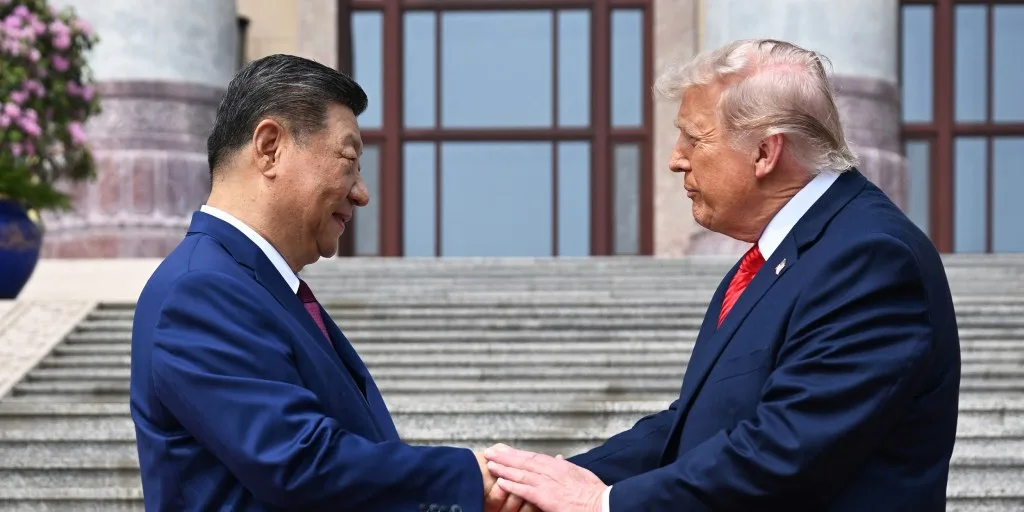
The recent summit between President Donald Trump and Chinese leader Xi Jinping yielded modest but tangible trade agreements, marking a step toward easing tensions between the two largest economies. China committed to purchasing at least $17 billion annually in U.S. agricultural products through 2028 and agreed to restore market access for U.S. beef and poultry, including resuming imports from states certified free of bird flu.
Aside from agricultural trade, China committed to purchasing a limited number of Boeing airplanes and securing access to U.S.-made jet engines and airplane parts, a move reflecting ongoing concerns over technology transfer and export restrictions. However, the Boeing order disappointed markets, as it was smaller than anticipated. These deals accompany the establishment of two new bilateral bodies – a board of trade and a board of investment – intended to manage trade relations and potentially reduce tariffs on $30 billion worth of non-sensitive goods.

The White House highlighted a new understanding between the two leaders to build a “constructive relationship of strategic stability,” a term Beijing has adopted to frame the evolving U.S.-China relationship. While this summit did not produce breakthroughs on contentious issues such as Taiwan or the Iran war, it set the stage for continued dialogue and cooperation. Xi Jinping has accepted an invitation to visit the U.S. later this year, symbolizing a commitment to maintain communications at the highest level.
Experts noted that while the agreements are modest compared to initial expectations, they reflect China’s cautious approach amid broader geopolitical uncertainties. The trade boards created aim to provide institutional channels for addressing ongoing economic and investment concerns, including U.S. worries about China’s export controls on rare earths and other key minerals essential to advanced technology and defense systems. Beijing has not yet confirmed its pledge to address these export controls.
These developments outline a pragmatic, if cautious, attempt by both nations to stabilize their economic ties while navigating their political differences. The emphasis on managed trade mechanisms and ongoing talks suggests that both sides view incremental progress as preferable to escalating tensions.