

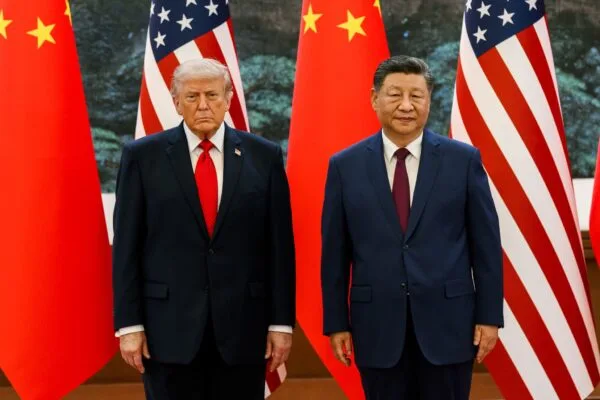
The recent summit between the United States and China clarified the direction of bilateral relations during President Donald Trump’s second administration, emphasizing a cautious but structured approach to their engagement. The two powers have agreed to define their relationship as “constructive and stable,” a phrase that signals mutual recognition of the need to manage competition responsibly while avoiding direct conflict.
This development marks a departure from previous administrations’ approaches. Under the Obama presidency, China proposed a “new type of major-country relationship” centered on mutual respect for core interests, which initially experienced some acceptance. However, tensions grew toward the end of Obama’s term. During Trump’s first administration, the relationship became increasingly ambiguous amid trade disputes and diplomatic friction. The Biden administration later promoted a “competitive relationship” framework, highlighting cooperation on climate and ongoing dialogue on defense and trade, but the tone shifted again with Trump’s return.

Japan’s perspective on these US-China dynamics underscores the complexity of regional diplomacy. Earlier, Japan maintained solid relations with Washington while China normalized ties with Tokyo. This triangulation led to moments where China sought Japan’s mediation, reflecting the interconnected nature of East Asian geopolitics. Japan has also used terms like “mutually beneficial relationship based on common strategic interests” to describe its approach to China, aiming to foster stability amid ongoing rivalry between the two global powers.
The latest summit also registered a pragmatic balance: while competitive elements remain, both Washington and Beijing are inclined to prevent the escalation of disputes, particularly amid ongoing tariff exchanges and restricted high-level access that characterized earlier periods. Starting around 2025, ministerial-level contacts between the two countries began to increase, paving the way for the current framework of managed competition emphasizing dialogue and conflict prevention.
In practical terms, this means the US and China will continue to cooperate selectively in areas like climate change and seek to avoid actions that could intensify rivalry to dangerous levels. This approach reflects a mutual interest in maintaining global stability while acknowledging the enduring contest for influence between the world’s two largest economies.