

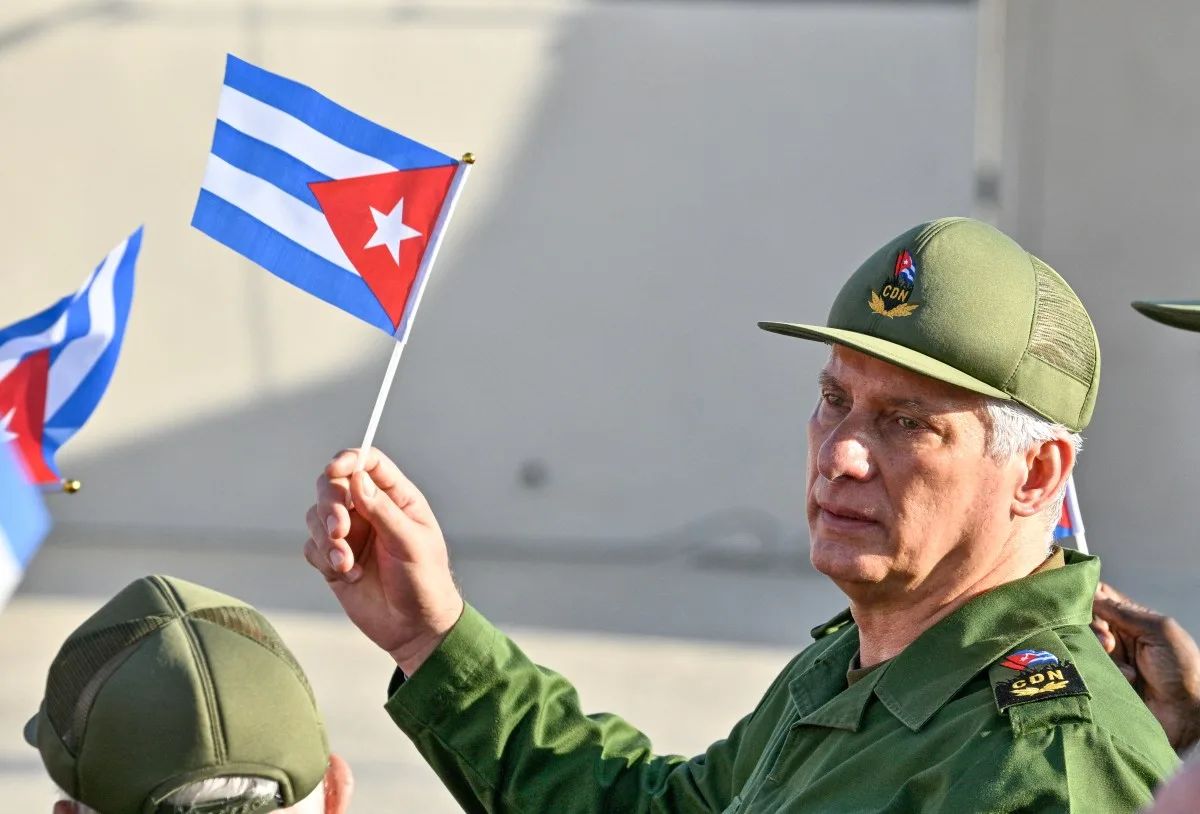
The United States has broadened its sanctions on Cuba, targeting prominent government figures and critical institutions in a move to increase pressure on the island’s Communist leadership. The new measures freeze assets and bar transactions involving Cuban President Miguel Díaz-Canel, his family members, and several key organizations within the Cuban state.
This latest round follows a series of economic constraints designed to isolate Cuba’s government amid an escalating crisis marked by fuel shortages and economic decline. The sanctions extend to entities such as the Ministry of the Revolutionary Armed Forces of Cuba, the Cuban Institute of Friendship With the Peoples, Amistur Cuba, and the Committees for the Defense of the Revolution—groups involved in coordinating foreign support and official exchanges.

Also included is Minera La Victoria, a Cuban-Australian mining venture, linking international business to the sanctions regime. Moreover, individuals under the new restrictions include Alejandro Castro Espín, son of former President Raúl Castro and a former security adviser implicated by the U.S. in past violent incidents. Other targets are Díaz-Canel’s wife Lis Cuesta Peraza, his stepson Manuel Anido Cuesta, and Raúl Alejandro Castro Calis, Alejandro Castro Espín’s son.
These sanctions block their financial assets in the U.S. and prohibit American businesses and citizens from engaging with them. The U.S. Secretary of State described the effort as targeting networks that facilitate and finance Cuba’s “subversive and radical operations,” signaling a strategy designed to disrupt the island’s governance and international partnerships.
The new sanctions build on an executive order signed previously that imposed secondary sanctions on foreign companies and financial institutions operating in core Cuban sectors such as energy, defense, and mining. This broad scope aims to deter international actors from supporting the Cuban government’s access to capital and resources.
Critics have warned that these measures might deepen the hardship on ordinary Cubans, striking at the population rather than solely the ruling elite. Some analysts argue that overwhelming economic pressure risks alienating Cubans whose support is crucial for meaningful change, emphasizing the need for policies that empower internal reforms rather than external coercion.