

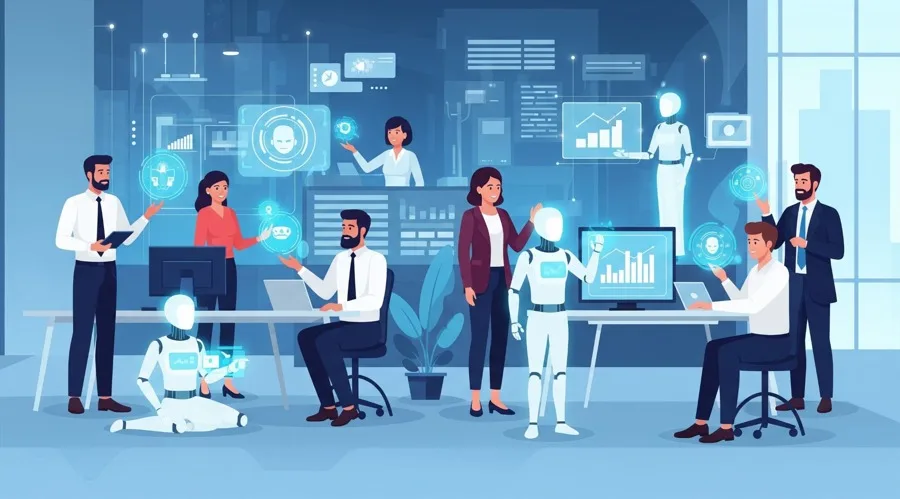
The rise of AI agents is not eliminating jobs but fundamentally reorganizing how labor operates within economic systems. Unlike earlier AI tools that simply assisted human workers, today’s AI agents actively coordinate workflows, manage tasks across platforms, and make autonomous decisions while depending on human input for complex, ambiguous situations.
These advanced systems excel in structured digital tasks such as booking reservations, writing code, and conducting research independently. However, they still encounter difficulties dealing with real-world unpredictability, social nuances, and tasks requiring judgment. For example, while an AI can quickly summarize customer policies, it may struggle to handle an irate customer effectively, illustrating persistent gaps between intelligence and situational execution.

This reality has led to a hybrid economic model where humans are indispensable as a backup or supporting network. AI systems typically escalate uncertain scenarios to human operators to maintain reliability and trust. This hybrid approach is already common in industries like autonomous driving, content moderation, and warehouse management, where AI agents and human roles integrate to deliver optimal outcomes.
Rather than replacing labor, AI agents act as coordinators that dynamically recruit human contributors for edge cases, verification processes, or physical tasks requiring local presence. This shifts labor from fixed roles operating software toward a more modular, distributed workforce that AI systems manage in real time.
The transformation parallels previous technological shifts seen in cloud computing, where resources evolved from fixed hardware to flexible on-demand services. Similarly, labor is becoming elastic and machine-coordinated, introducing new efficiencies and work structures without erasing human involvement.