

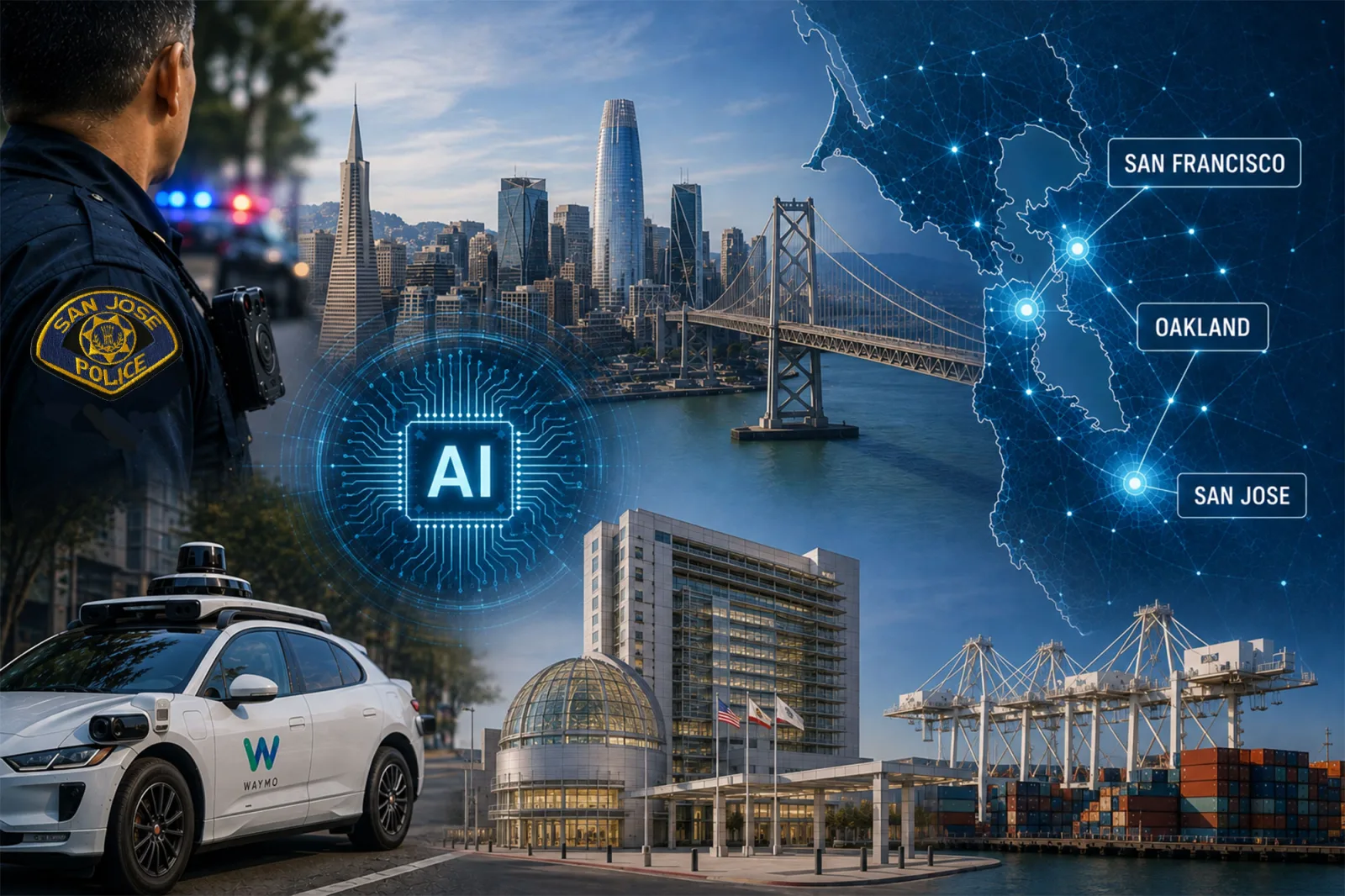
Several Bay Area cities are actively embedding artificial intelligence into their municipal frameworks, marking a shift from futuristic promise to tangible implementation. San Francisco, Oakland, and San Jose have begun deploying AI tools across various functions, such as managing police body camera footage, optimizing city services, and improving emergency response.
The use of AI in these cities reflects a broader trend toward leveraging advanced technology to increase government efficiency and transparency. Officials are experimenting with AI-powered data analysis to detect crime patterns, expedite bureaucratic processes, and better allocate resources. This approach aims to improve the quality of life for residents by accelerating decision-making and offering more personalized public services.

Among the applications under consideration, AI helps analyze vast volumes of video data from police body cameras, which can reduce the time officers and oversight bodies spend reviewing footage. Additionally, AI-driven algorithms assist in predicting areas with higher risks of criminal activity, enabling more proactive policing. City planners are also looking at AI to manage infrastructure maintenance, traffic flow, and public health monitoring.
These efforts come amid ongoing debates about the ethical and privacy implications of AI use in government. Local officials emphasize the importance of transparency and public input when deploying such technologies to ensure accountability. There is also a focus on preventing algorithmic biases that could disproportionately impact vulnerable communities.
By investing in AI, these municipalities aim to set a precedent for tech integration in public administration, signaling a future where data-driven governance becomes the norm. The innovation-driven environment of the Bay Area provides a fertile ground for these pilot programs, which may influence how cities nationwide adopt AI solutions in the coming years.