

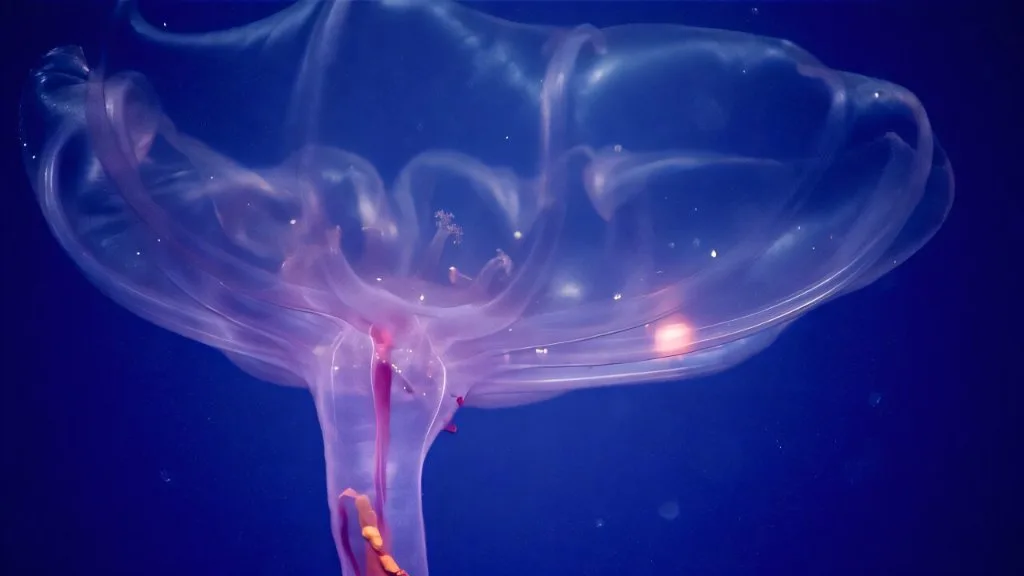
A species of swimming sea cucumber near the Galápagos Islands plays a previously unrecognized role in how carbon moves through the ocean. Unlike typical sea cucumbers that dwell on the seafloor, this species actively swims through the water column, intercepting organic particles that are usually sinking to the ocean floor.
By catching and consuming these sinking particles, the sea cucumbers prevent some organic carbon from reaching the seabed. Instead, they process and respire it, releasing part of the carbon back into the water as dissolved CO2, which can alter local carbon cycling dynamics.

This behavior creates an ecological detour, shifting the fate of organic matter in marine ecosystems. It suggests that the impact of certain benthic organisms on carbon storage might be more complex than previously understood, with some species influencing how much carbon is sequestered in deep ocean sediments versus returned to the atmosphere.
These findings contribute to a broader understanding of the ocean carbon cycle, which relies on the movement and transformation of organic material between the surface, water column, and seafloor. Since ocean carbon storage plays a vital role in regulating global climate by sequestering atmospheric CO2, uncovering new biological pathways like that involving swimming sea cucumbers is important for refining models of carbon flux.
The study underscores the need to consider the behaviors of diverse and sometimes overlooked marine species to fully grasp carbon dynamics in ocean ecosystems, particularly in sensitive regions such as the Galápagos.