

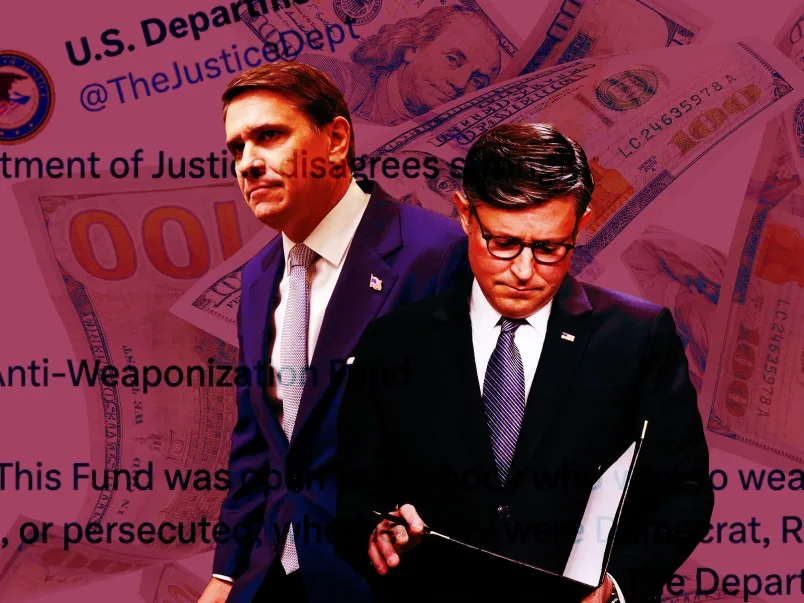
The Department of Justice announced it will follow a court ruling that temporarily blocks the Trump administration’s anti-weaponization fund, a measure designed to compensate individuals allegedly victimized by weaponized government actions. This development comes after a federal judge issued an injunction preventing the Department from transferring funds, processing applications, or disbursing payments related to the program pending further judicial review.
The fund became the subject of legal scrutiny after a former federal prosecutor connected to January 6 investigations sued the Justice Department, challenging its creation. U.S. District Judge Leonie Brinkema’s order paused the fund's operations to consider whether to halt it permanently, with a hearing scheduled soon. The DOJ’s statement clarified its disagreement with the ruling but confirmed it would abide by the court’s authority.

The Justice Department defended the fund as a bipartisan effort aimed at rectifying harm caused by government abuse and persecution, emphasizing that eligibility was open to all political affiliations. Despite this, reports from major political outlets indicate that Republican leaders, including President Trump, may be reconsidering or distancing themselves from the initiative amid concerns raised within the party’s ranks about financing and political fallout.
Additional litigation traces the fund’s origins back to a legal maneuver initiated by Trump against the IRS, which ultimately led to the fund’s establishment as part of a settlement. This layered legal context complicates the fund’s future, as other cases continue to unfold surrounding its legality and implementation.
By publicly committing to the court order, the DOJ signals compliance for now but leaves open the possibility of reviving the fund should legal conditions change. The unusual move to issue a formal statement may reflect heightened tensions between the Justice Department and political stakeholders over the program’s legitimacy and approval.