

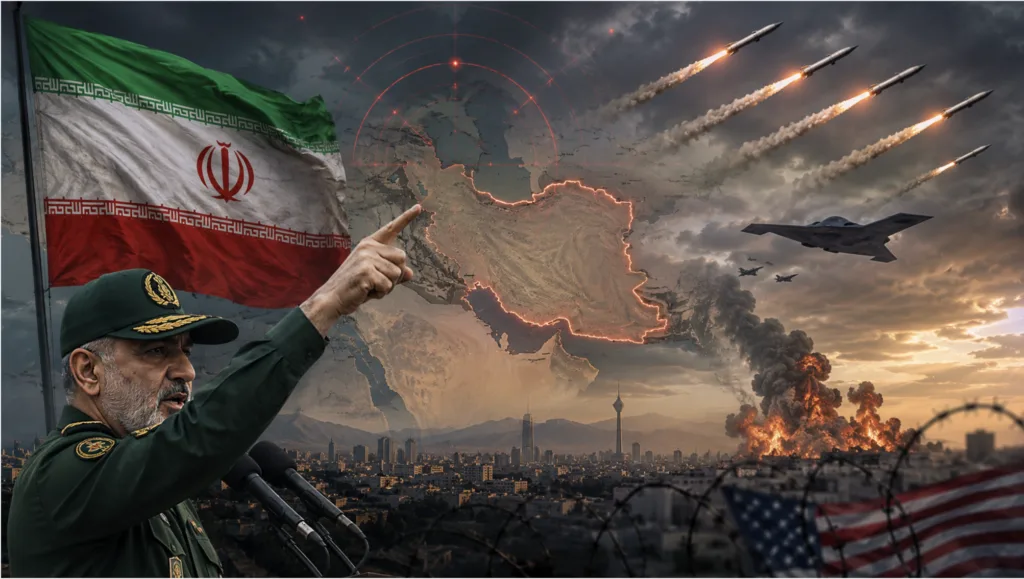
The escalation of hostilities between Iran and the United States took a sharper turn as Major General Mohsen Rezaei, a senior military adviser to Iran’s leadership, declared that ongoing American airstrikes risk triggering an extensive Iranian military offensive. He emphasized that Iran would move beyond proportional retaliation, indicating that no political boundary in the region would be spared if the strikes continue.
The conflict has already expanded in scope, with Iranian forces targeting vital infrastructure in neighboring countries. Kuwait has suffered considerable damage to its water and desalination plants, disrupting essential services. Kuwaiti officials, including the minister responsible for electricity and water, have inspected the affected sites personally. This marks a notable impact on civilian infrastructure directly linked to the broader conflict.

Additionally, American military personnel have reported injuries from Iranian retaliatory airstrikes on U.S. bases, signaling a rise in the intensity and risk of casualties on both sides. Media correspondents noted a recent wave of Iranian strikes aimed at critical Saudi Arabian sites, including the port of Yanbu—a strategic energy export hub—and the Prince Sultan Air Base, which hosts U.S. military operations. These attacks highlight a significant expansion of the conflict beyond initial targets, raising concerns about the stability of key energy routes and regional security.
The rapid broadening of military engagements involving infrastructure and military bases across Gulf countries suggests the potential for a more protracted and geographically extensive conflict. Iran’s warning of a full-scale offensive reflects a strategic shift that could alter the dynamics of security and diplomacy in the Middle East.