

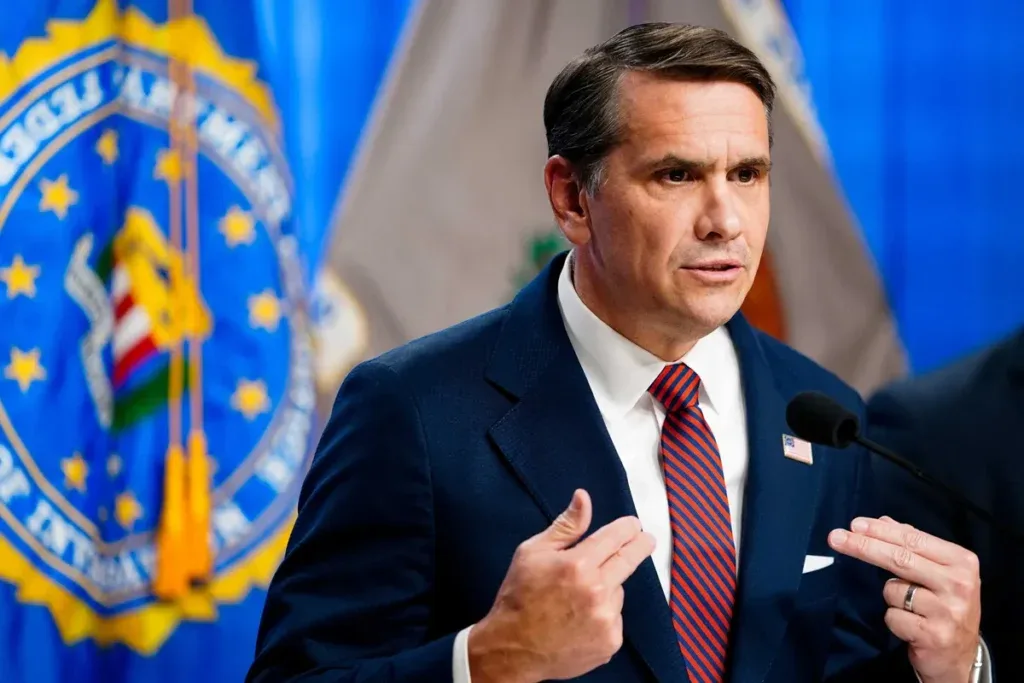
The Justice Department’s recent court filing to pay the legal fees of six protesters indicted in the “Broadview Six” case has intensified speculation about efforts to conceal misconduct tied to Acting Attorney General Todd Blanche. This unusual move came alongside the department’s insistence on blocking discovery requests that sought communications between federal prosecutors and top DOJ officials, including Blanche himself.
The defendants, arrested last fall outside a Chicago-area Immigration and Customs Enforcement facility, pushed for access to all communications involving Chicago federal prosecutors, Associate Deputy Attorney General Aakash Singh, and Blanche, including Singh’s cell phone records throughout the investigation. Their motion for discovery highlights concerns about potential prosecutorial misconduct.

The case unraveled earlier this year after a federal judge determined prosecutors had acted improperly by dismissing skeptical grand jurors, endorsing their own evidence, and submitting heavily redacted transcripts to obscure their actions. The DOJ’s willingness to pay defendants’ legal costs—an award typically reserved for prosecutions conducted in bad faith—stands out as an uncommon judicial concession.
Legal experts reacting to the DOJ’s stance suggest that the government’s refusal to allow discovery while offering to cover fees signals an attempt to prevent damaging evidence from surfacing. Some commentators describe the situation as a transparent strategy to halt further investigation into potentially severe wrongdoing within the department.
In court documents, the DOJ maintained that paying fees does not imply admission of misconduct. However, observers argue that settling fees without contesting liability while denying discovery reflects poorly on the department’s commitment to accountability. The withheld communications could shed light on the extent of involvement by senior DOJ officials during the episode.
The “Broadview Six” case and the ensuing legal battle underscore growing tensions over prosecutorial integrity and oversight within the Justice Department. Defendants and attorneys emphasize that the government’s hesitation to reveal internal communications only deepens suspicion about what authorities might be seeking to keep hidden.