

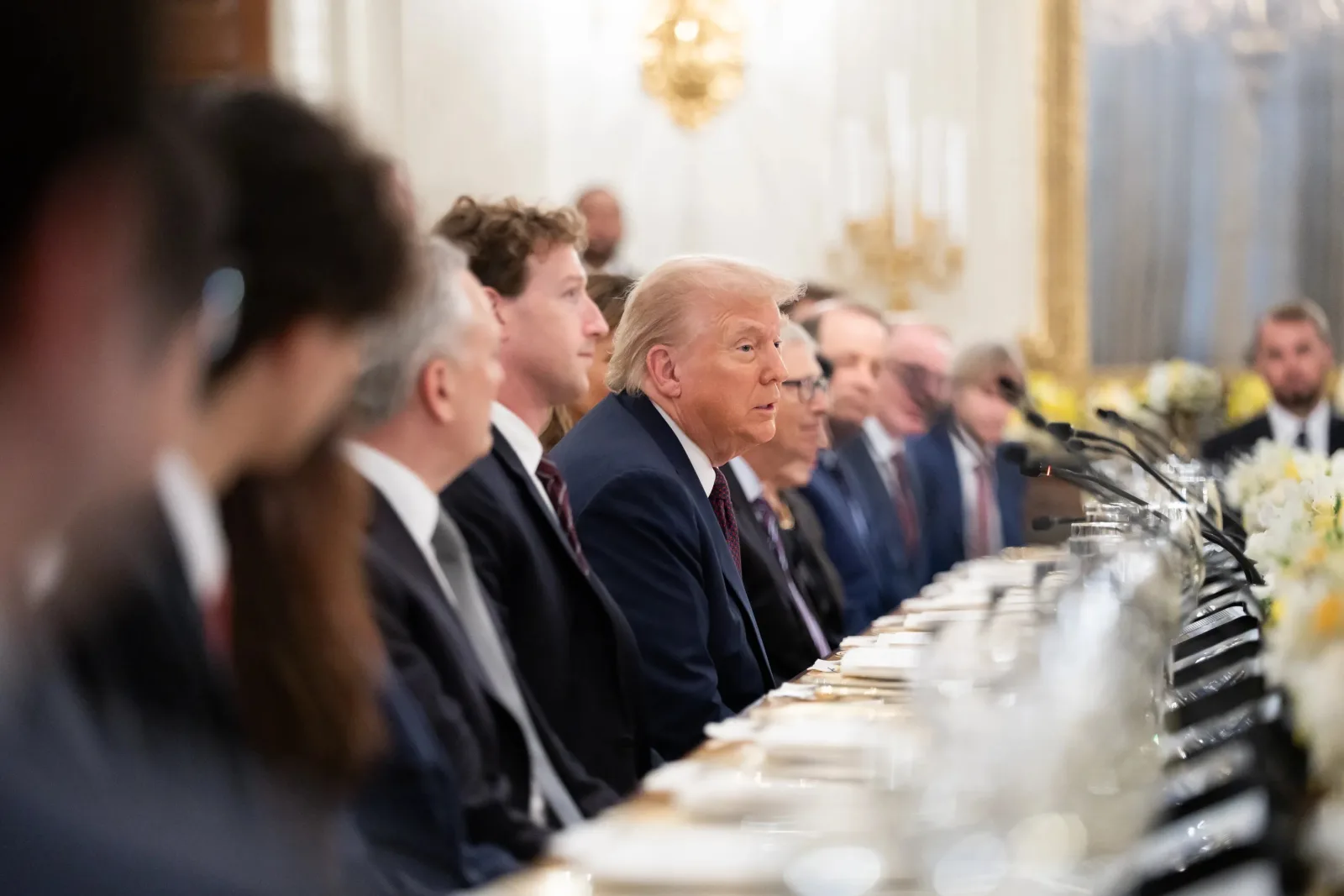
Top tech executives Mark Zuckerberg, Elon Musk, and Jensen Huang reportedly played a pivotal role in persuading President Trump to reject plans for a government-backed AI regulatory agency. They advised the administration against establishing a new regulator that would have been funded by the industry itself, expressing concerns about its impact on innovation and business autonomy.
The proposed AI regulator aimed to oversee artificial intelligence development and deployment, raising issues about accountability, safety, and ethical standards. However, the involvement of Zuckerberg, Musk, and Huang reportedly shifted the administration’s stance, favoring a lighter regulatory approach rather than a formal, centralized agency.

This influence highlights the significant sway that leading technology figures hold in shaping U.S. policy on emerging technologies. Their opposition to an industry-funded regulator reflects broader industry concerns about potential stifling of innovation through heavy-handed oversight.
The pushback against the AI regulator occurred amidst growing global debates on how best to govern AI technologies, balancing innovation with risk mitigation. Critics of the government-led approach argue that technology moves too rapidly for traditional bureaucratic frameworks, while proponents stress the need for stringent safeguards.
While details about the internal discussions remain limited, sources indicate Zuckerberg, Musk, and Huang emphasized alternative approaches to AI governance that rely more on voluntary standards and market-driven solutions. These alternatives focus on fostering competition and responsible innovation without imposing broad regulatory bodies.
The decision to abandon the creation of a centralized AI regulatory agency signals ongoing tensions between government attempts to regulate fast-paced technological fields and the industry's desire to maintain operational flexibility. This dynamic continues to shape the evolving landscape of AI policy in the United States.