

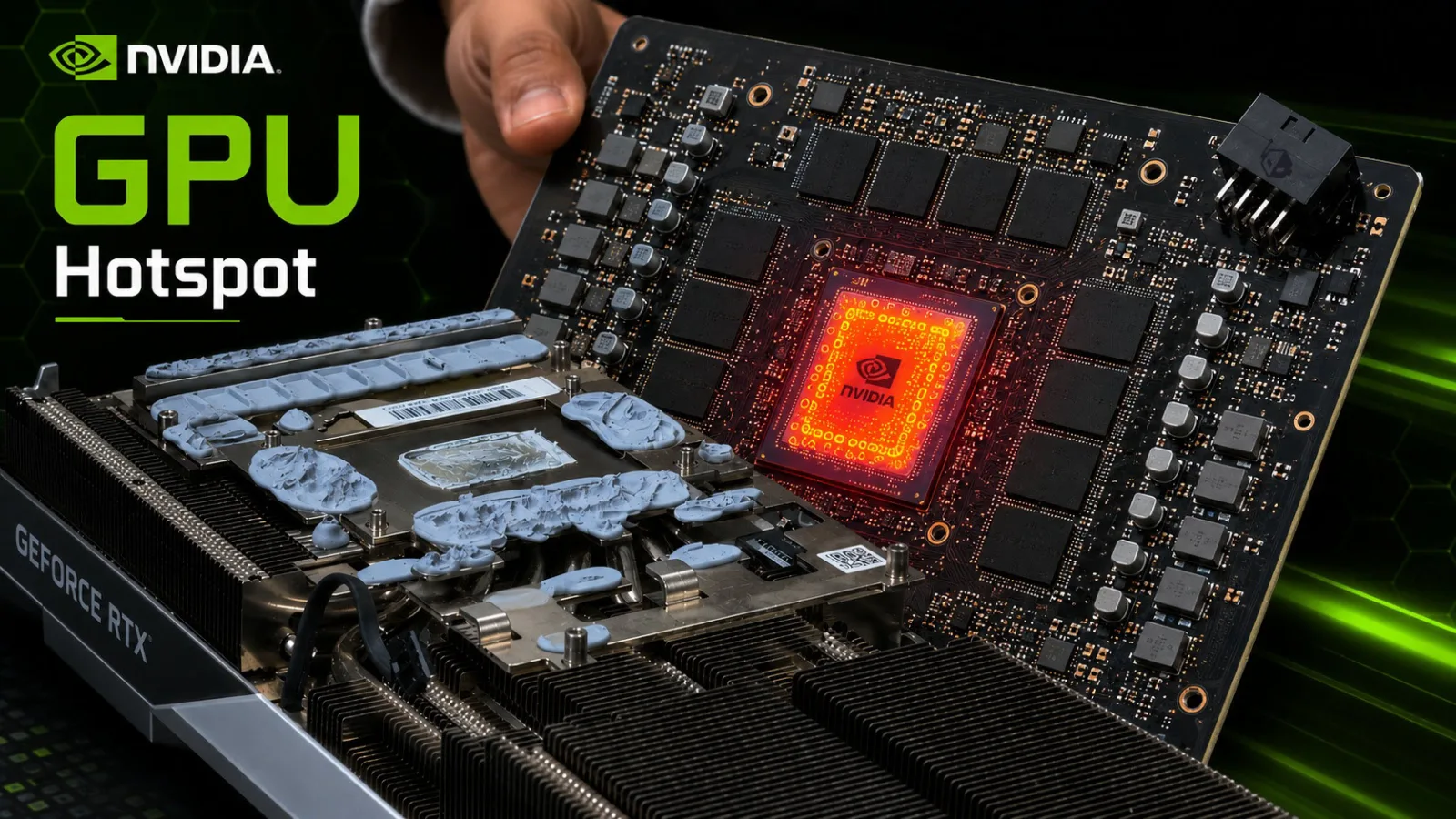
NVIDIA’s RTX 50 series graphics cards appeared to hide a critical temperature sensor essential for diagnosing thermal problems, but recent mods have unlocked the GPU Hotspot temperature reading, uncovering significant overheating issues that explain unexpected performance drops during gaming.
While NVIDIA shifted focus to average GPU temperatures in the RTX 50 "Blackwell" generation, this metric has proven insufficient in detecting thermal throttling. Average temperatures often remain below critical thresholds, concealing localized heat spikes in the GPU silicon that trigger protective slowdowns. Industry monitoring tools lost accurate hotspot data after NVIDIA allegedly removed or disabled the sensor on these cards, leading to misleading temperature reports.

Brazilian modder and repair expert Paulo Gomes recently developed modifications that restored hotspot temperature monitoring on RTX 50 GPUs. Through this breakthrough, Gomes identified hotspot temperatures soaring beyond a hundred degrees Celsius, far above the safer average readings around 70-80°C. Such extreme localized heating caused the GPU to repeatedly throttle performance to prevent damage, even as fans spun faster and users saw no warning in average temperature metrics.
Investigations revealed the root cause to be poor thermal contact between the GPU die and the cooler, likely from suboptimal thermal paste application or cooler mounting issues. After replacing the thermal interface material (TIM), hotspot temperatures dropped notably, improving performance to expected levels. This demonstrated that the sensor remained present on the hardware but was inaccessible to mainstream diagnostic software without the mod.
This discovery highlights the limitation of relying solely on average temperature metrics to assess GPU cooling health. The hotspot reading, which records the highest temperature across the GPU surface, remains a crucial diagnostic tool to detect uneven heat distribution and inadequate cooling contact. Without it, users risk undetected thermal throttling, compromising gaming performance and hardware longevity.
Although NVIDIA's official software only reports average and memory temperatures on RTX 50 GPUs, community mods enable users and repair professionals to regain insight into critical thermal data previously obscured. This situation underscores the need for transparent temperature monitoring in modern GPUs to prevent performance degradation caused by overheating spots.