

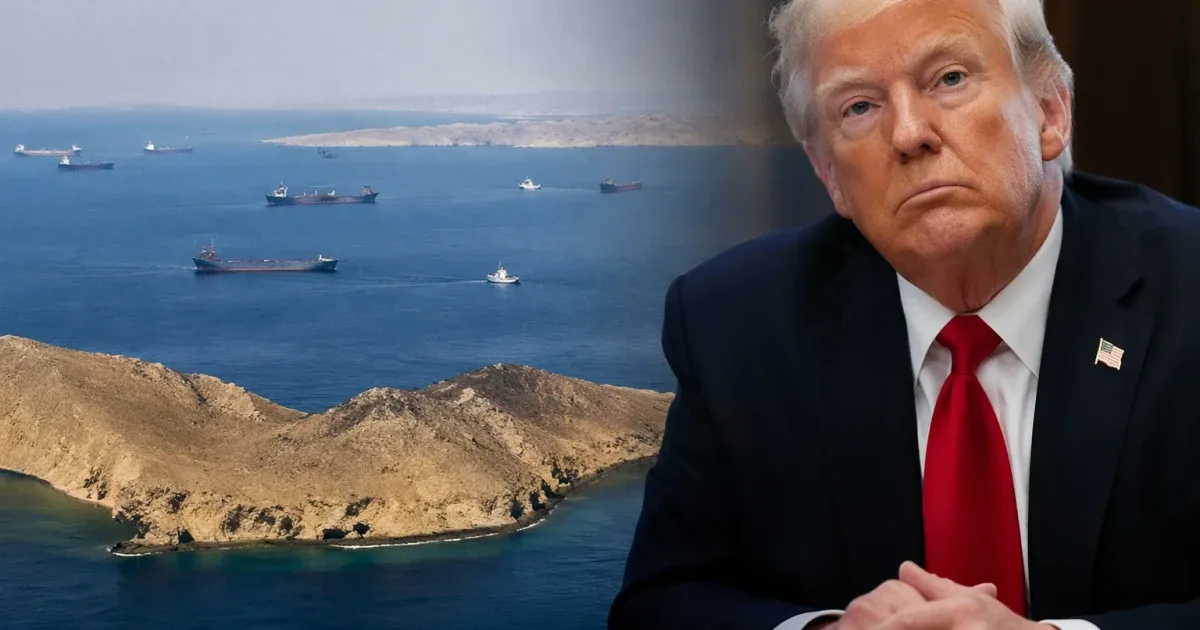
President Donald Trump issued a stark warning to Iran, demanding that Tehran publicly affirm the Strait of Hormuz remains open to maritime traffic. This came after funeral mourners at a ceremony for Ayatollah Ali Khamenei chanted slogans calling for Trump’s death, escalating tensions between the United States and Iran.
The Strait of Hormuz is a strategic maritime corridor through which roughly one-fifth of the world’s daily oil supply passes during peacetime. Trump insisted that Iran immediately declare it would not obstruct shipping lanes or fire on vessels transiting the narrow waterway. A senior U.S. official cautioned that refusal to do so would lead to severe consequences, signaling potential military escalation.

In a message posted on Truth Social, Trump warned that “1000 Missiles are Locked and Loaded” and threatened to “completely decimate and destroy all areas of Iran” if the Iranian government acted on its threats. This followed reported U.S. retaliatory strikes on roughly 90 Iranian military and strategic targets, including air defenses, missile and drone storage, naval assets, and logistics infrastructure situated along Iran’s coastline.
Iran has also been actively responding with missile and drone attacks on U.S. allies in the region, especially in three Gulf countries hosting American military personnel. Maritime traffic in the Strait of Hormuz dropped substantially, with only 15 ships passing in the 24 hours prior, far below normal activity.
While Iran has not issued the public declaration demanded by Washington, its Foreign Ministry spokesperson reaffirmed Tehran’s control over the strait and insisted on charging fees for ships passing through. Iranian Foreign Minister Abbas Araghchi planned consultations in Oman amid diplomatic efforts to address the situation.
The escalating confrontations have drawn criticism from various groups. The Council on American-Islamic Relations condemned President Trump for mocking Islamic practices surrounding Khamenei’s funeral. Meanwhile, Iran maintains that it is responsible for managing normal maritime services without external interference.