

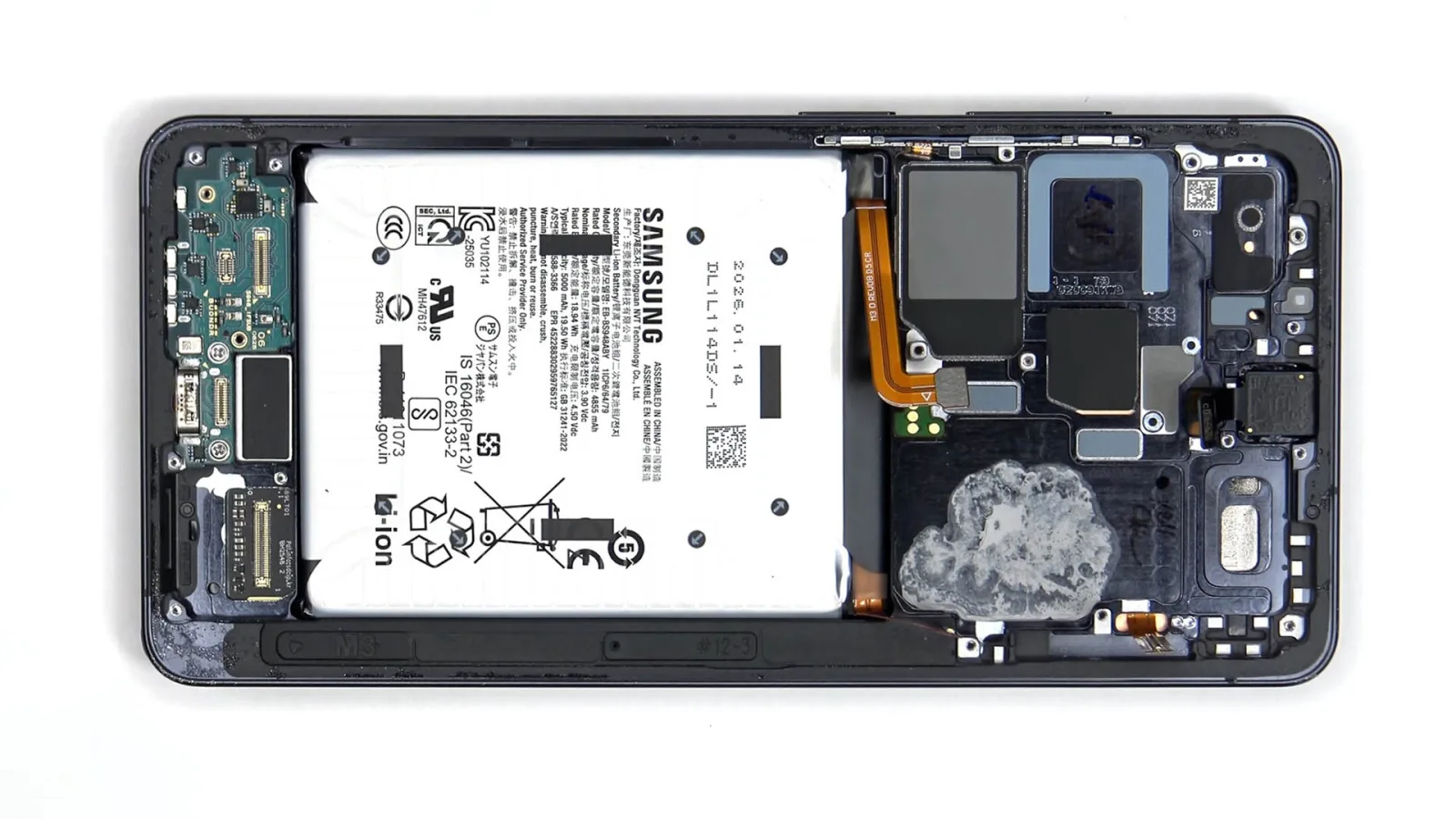
Samsung decided not to implement silicon-carbon (Si-C) battery technology in its upcoming Galaxy S27 Ultra, primarily to avoid significant increases in production costs. Industry insiders reveal that the newer silicon-carbon cells could raise expenses by over $20 million per one million units, compared to traditional lithium-ion batteries.
Despite this, the company is reportedly testing batteries with capacities between 5,600mAh and 5,800mAh for the S27 Ultra, potentially marking its first leap beyond the 5,000mAh mark since the Galaxy S20 Ultra. Current evaluations suggest the device may include a minimum 5,500mAh battery if trials prove successful, aiming to boost endurance without introducing more costly silicon-carbon chemistry.

Samsung’s hesitation stems from cost efficiency concerns amidst broader supply chain challenges, including a global DRAM shortage that pushes manufacturers to streamline expenses. The silicon-carbon cells, while promising higher energy density and faster charging, currently come with a price tag double that of comparable lithium-ion counterparts, making widespread implementation unattractive at this stage.
The move to a larger battery capacity also aligns with efforts to compete directly against Apple’s iPhone 18 Pro Max, which reportedly benefits from bigger battery units paired with software optimizations that extend battery life. A similar strategy could help Samsung improve the Galaxy S27 Ultra’s endurance without radically altering its battery chemistry.
Moreover, the Galaxy S27 Pro is rumored to maintain a 5,000mAh battery, the same capacity used in last year’s Galaxy S26 Ultra, underscoring Samsung’s intent to differentiate its top-tier Ultra model. This step intends to ensure the Ultra edition remains compelling in a market facing slowing demand due to ongoing memory shortages and component scarcity.
While these battery advancements appear promising, industry watchers caution that testing is ongoing and final specifications may change. Samsung’s cautious approach reflects the balance between innovation and cost control as it prepares to launch its flagship amid competitive pressures and supply constraints.