

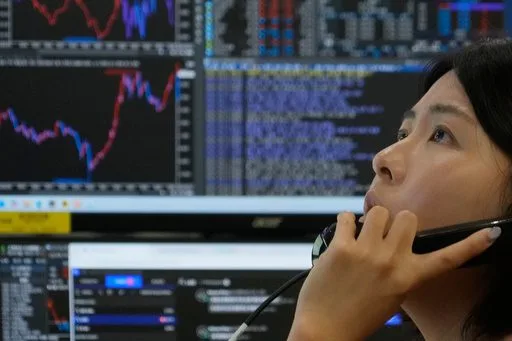
U.S. stock markets continued their upward trajectory on Monday, approaching new record highs even as oil prices climbed in response to fresh tensions between the United States and Iran. Brent crude oil surged over 4%, recovering part of last week’s losses and settling just below $95 a barrel, a level significantly above pre-conflict prices near $70.
The rising cost of oil adds to inflationary pressures, affecting both consumer expenses and corporate fuel costs. Notably, airlines felt the pinch as United Airlines and Alaska Air Group shares dropped amid higher fuel bills. Still, many investors appeared unfazed by these challenges. The S&P 500 gained 0.4%, the Nasdaq rose 0.7%, and the Dow Jones inched up slightly, each hovering near or at all-time highs.

Underlying the market’s resilience was a retreat in bond yields during the session, alleviating some pressure caused by expensive energy prices. This trend reversed initial losses, particularly in smaller companies represented by the Russell 2000 index, which closed near breakeven after earlier declines. Small-cap firms often face greater borrowing costs, making them sensitive to changes in interest rates.
Optimism lingered that diplomatic efforts to reopen the Strait of Hormuz, a critical oil shipping route, could ease supply concerns and help tame inflation. Meanwhile, technology stocks dominated market gains, spearheaded by Nvidia, which surged more than 6% following multiple product announcements at a high-profile industry event. As the most valuable company in the S&P 500, Nvidia’s significant weight means its stock movements heavily influence the overall market index.
Experts note that the concentration of market capitalization within the top 10 biggest companies—particularly in Big Tech—is at a four-decade peak, controlling nearly half of the S&P 500’s total value. While this concentration has driven recent advances, it also poses risks. Analysts warn that any broadening of market leadership beyond these giants could lead to volatility. Early signals suggest a rotation in market breadth may be underway, potentially impacting index funds closely tied to Big Tech performance.