

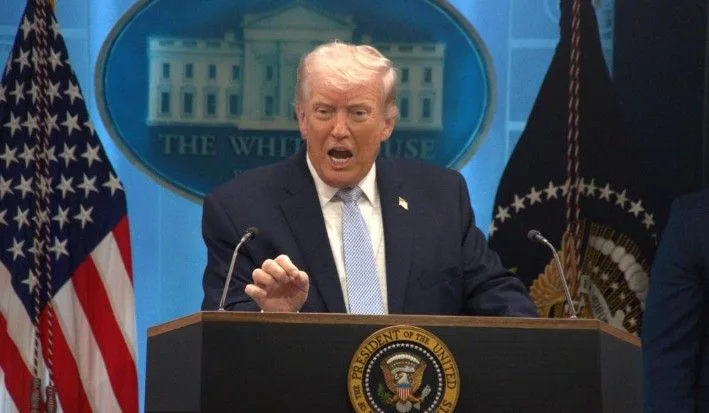
US President Donald Trump is pushing to revise the existing framework with Iran, aiming to include more detailed restrictions on Tehran’s enriched uranium reserves and the reopening of the Strait of Hormuz. This move comes amid ongoing negotiations that risk regressing due to complex internal and diplomatic challenges on both sides.
While the original agreement bars Iran from pursuing nuclear weapons, Trump wants explicit clauses preventing acquisition as well as development. These proposed changes could delay the negotiation process since Tehran insists on safeguarding its national interests, particularly regarding the stockpile of sixty percent enriched uranium and terms for allowing maritime traffic through the critical Strait of Hormuz.

Negotiations remain sensitive largely because Iran’s Supreme Leader, Mojtaba Khamenei, has the final say, complicating the path to any swift resolution. Iranian officials, including Foreign Minister Abbas Araghchi, have tempered expectations about a quick breakthrough, describing ongoing talks as preliminary and cautioning against premature conclusions. At the same time, some Iranian parliament leaders emphasize that no agreement will be accepted unless it fully protects the rights of the Iranian people.
Trump has expressed confidence in eventually reaching an agreement, though he acknowledges the protracted nature of these discussions. He highlighted the expanded commitment from Tehran, which now reportedly covers a promise not to “develop or acquire” nuclear weapons, emphasizing that the US seeks firm guarantees to prevent nuclear proliferation.
Despite tensions, the White House anticipates that the final agreement could materialize within days or weeks, contingent on Tehran’s response to the new proposals. The process reflects a delicate balancing act as both countries negotiate sensitive security issues amid broader geopolitical stakes.