

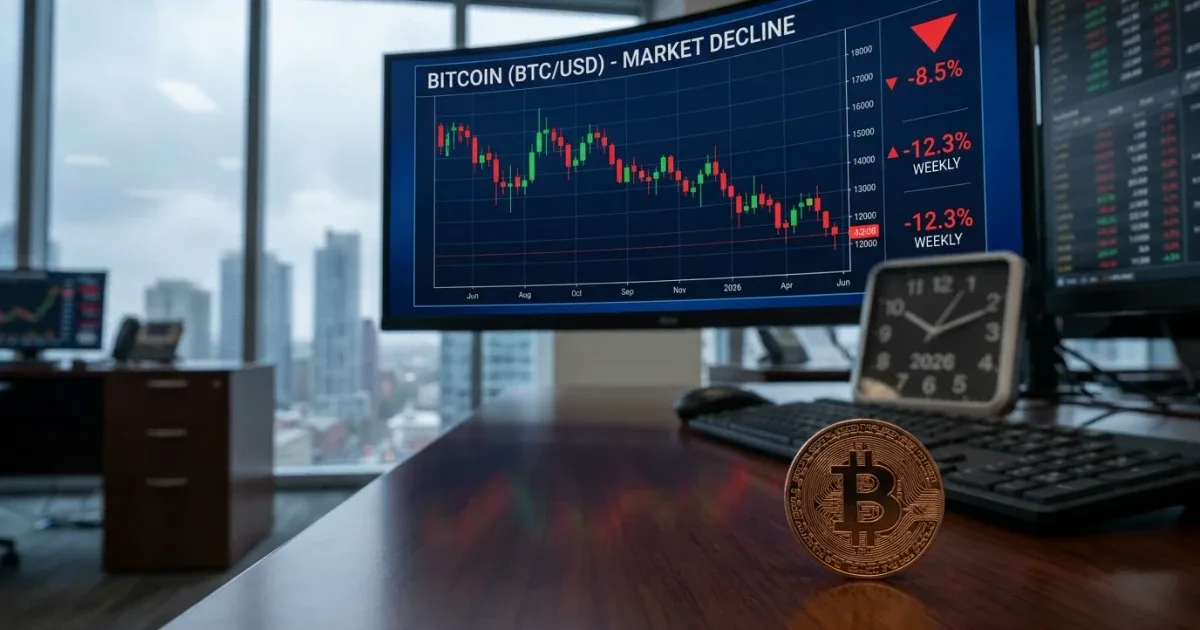
Bitcoin retreated to price points observed prior to the Iran conflict, concluding one of its weakest weekly performances in recent months. This reversal follows a short-lived rally fueled by geopolitical tensions, revealing how swiftly market sentiment can reverse amid changing global events.
The broader cryptocurrency market also reflected this downturn, with major coins sliding alongside Bitcoin. The recent sell-off erased gains made during preceding upswings, highlighting increased caution among traders and investors as optimism diminishes.

A principal driver of this decline is a liquidity rotation within crypto markets. As the narrative supporting recent gains fades, both retail and institutional participants appear to reallocate capital away from digital assets. Data indicate a shrinking order book depth and lower trading volumes, placing additional pressure on prices across leading exchanges.
Bitcoin’s volatility often amplifies these moves, especially when geopolitical or macroeconomic factors come into play. The current pattern of an initial rally sparked by tension followed by a sharp retracement is consistent with historical trends in crypto markets, where sentiment and headlines heavily influence price action.
Real-time metrics from on-chain analysis platforms provide insight into investor behavior during these shifts. These tools track fund movements between wallets and exchanges, revealing liquidity flows that contribute to the rapid price changes.