

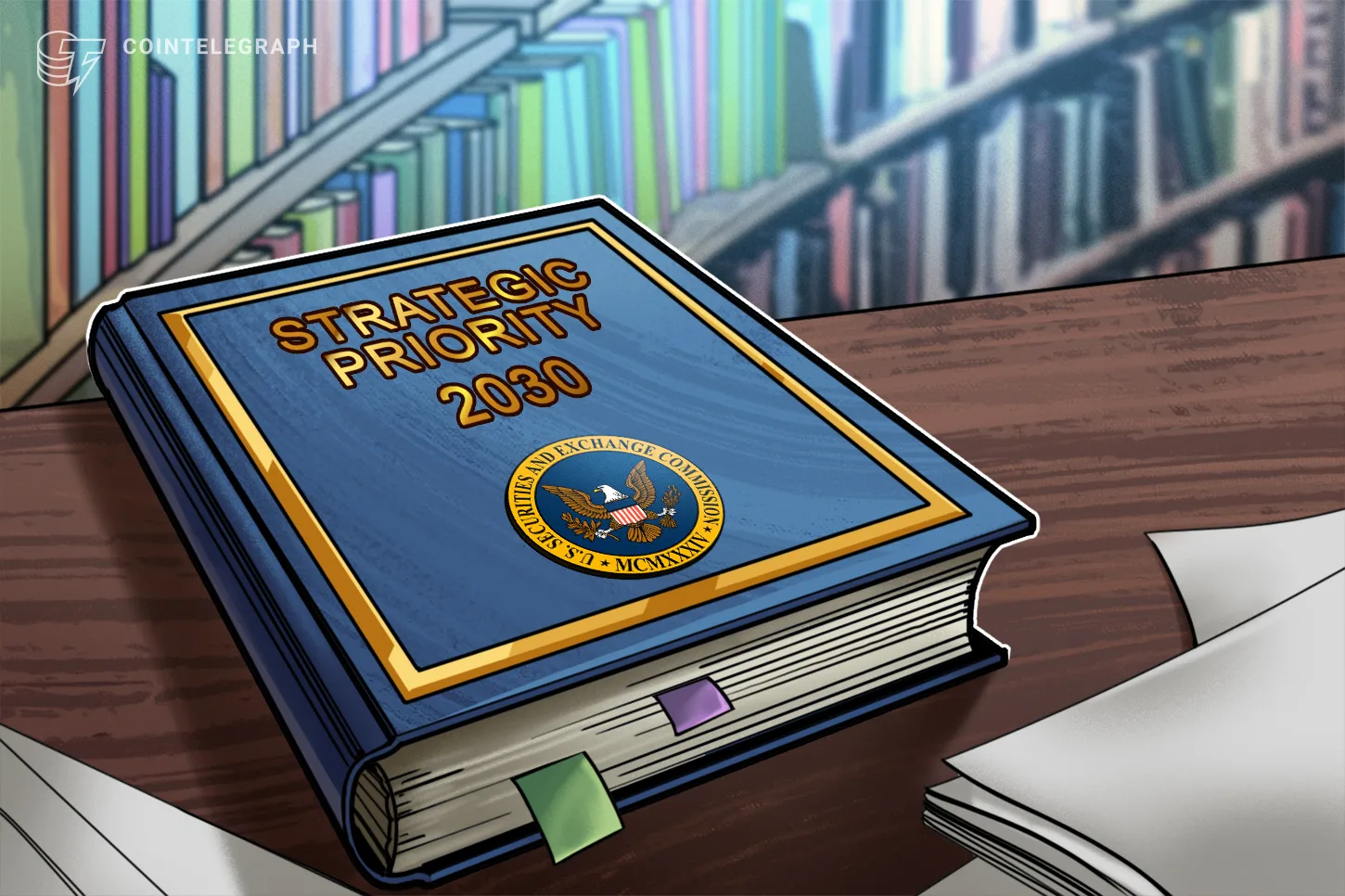
The U.S. Securities and Exchange Commission (SEC) has placed digital assets and blockchain technology at the forefront of its regulatory agenda for the next five years. In a recently published draft of its Strategic Plan for fiscal years 2026 to 2030, the SEC committed to providing a clear, principled regulatory framework tailored to the unique challenges and opportunities posed by cryptocurrencies and distributed ledger technology.
Highlighting the rapid growth of digital assets beyond existing laws, the agency underscored the need for legal certainty to support compliant capital formation. Among the specific focuses are tokenized offerings and on-chain financial infrastructure, areas the SEC intends to foster under appropriate regulatory oversight while avoiding overlapping or conflicting rules. The plan also points to custody, trading, and staking services as components that should function within a coherent regulatory environment.

A critical aspect of the SEC’s approach involves resolving long-standing jurisdictional overlaps with the Commodity Futures Trading Commission (CFTC). The two agencies have acknowledged the complexities in delineating responsibilities over digital assets, which has often led to regulatory uncertainty. To address this, they recently signed a memorandum of understanding to enhance cooperation and information sharing on emerging financial technologies.
This jurisdictional clarity is also a focus of congressional efforts, particularly through the Digital Asset Market Clarity Act, which proposes expanding the CFTC’s authority over significant parts of the digital asset market. The bill has moved forward in the Senate Banking Committee and awaits a full Senate vote. The SEC’s strategic plan aligns with these legislative developments by emphasizing the need for coordinated, transparent regulatory frameworks that reflect the evolving landscape of digital finance.
Overall, the SEC’s draft plan signals a shift toward embracing the potential of blockchain and crypto assets to transform America’s financial infrastructure while establishing safeguards that protect investors and market integrity.