

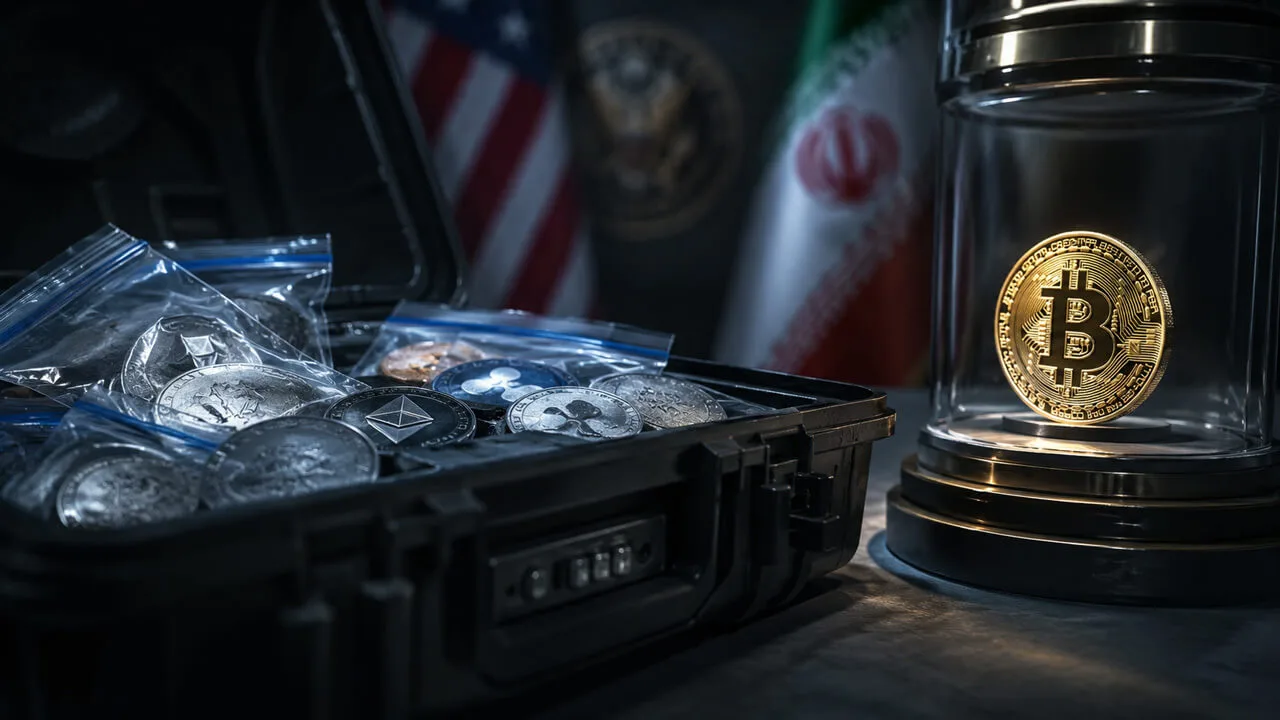
The US Treasury revealed it has seized an estimated $1 billion in cryptocurrency linked to Iran, a move that highlights unresolved questions about the legal status and ultimate use of these digital assets. While officials confirmed the crypto was “grabbed” from Iranian wallets, details on the specific types of assets and ownership remain undisclosed, complicating their potential integration into government reserve frameworks.
Such ambiguity deeply matters because the 2025 executive order from former President Donald Trump created a bifurcated system for how the US government manages seized digital currencies. Bitcoin assets that are finally forfeited through legal processes are directed into the Strategic Bitcoin Reserve, a fund designed to hold BTC permanently without the option to sell. Other digital tokens, including stablecoins and altcoins, after forfeiture become part of a separate container known as the US Digital Asset Stockpile. The seizure thus acts as a litmus test for classifying which of the confiscated Iranian assets can legitimately enter the Bitcoin reserve and which must remain in the stockpile or potentially frozen.

However, a key distinction remains between wallets that are “grabbed” by authorities and those assets that officially change hands through legal forfeiture. Under sanctions enforced by the Office of Foreign Assets Control (OFAC), blocked assets are frozen—a sanction hold that does not guarantee government ownership. For example, stablecoins like USDT can be frozen by issuers following coordination with US regulators, which restricts user access but does not equate to formal seizure. This means some assets connected to Iran may still be in a legal limbo rather than fully in US government possession.
Reports confirmed that significant portions of the frozen tokens are tied to notable Iranian entities such as the Central Bank of Iran and militias like the IRGC-Qods Force and Hezbollah. One known freeze involved $344 million in Tether (USDT), locked across two addresses. The remaining portion of the $1 billion estimate lacks detailed public accounting, leaving the full composition and status of those assets opaque. Without clear public disclosure of wallet addresses or token types, it is impossible to know how much is Bitcoin and how much involves other digital currencies.
The strategic framework laid out by Trump’s executive order ensures that only forfeited Bitcoin enters the Strategic Bitcoin Reserve, emphasizing the legal finality required before the government converts seized crypto into a permanent holding. Non-Bitcoin tokens, regardless of forfeiture, instead accumulate in the Digital Asset Stockpile, where they are available for future disposition but are not part of the core BTC reserve. This distinction affects how the Treasury can deploy or manage the assets in practical terms.
Thus, the seizure’s future impact hinges on ongoing legal processes. If Iranian Bitcoin holdings reach final forfeiture, they could bolster the Strategic Bitcoin Reserve. If the assets are stablecoins, other tokens, or remain frozen without forfeiture, they will either stay in the stockpile or off the government’s balance sheet altogether. The current seizure underscores not only the scale of Iran’s crypto presence amid sanctions but also the complex intersection of law enforcement, digital asset regulation, and US government crypto policy.