

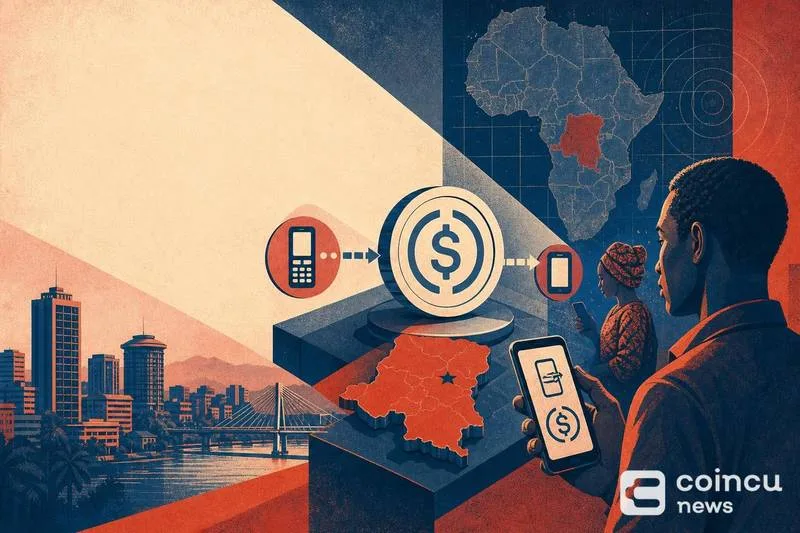
A pilot initiative combining Visa’s global payment network, M-Pesa’s mobile money platform, and Onafriq’s fintech infrastructure has begun in the Democratic Republic of Congo (DRC). This collaboration aims to simplify and accelerate cross-border money transfers by integrating stablecoin settlement technology with existing mobile payment systems.
The DRC was selected for this pilot due to its large unbanked population and rapid growth in mobile money usage, creating fertile ground for alternative financial solutions. The project targets the costly and slow remittance corridors that currently depend heavily on multiple currency exchanges and intermediary banks. By using a stablecoin-based digital dollar as a settlement layer, the pilot seeks to streamline these transactions, lowering fees and transaction times for users.

This initiative allows everyday users to transact through familiar mobile money apps without needing direct interaction with cryptocurrencies or digital wallets. Onafriq acts as the critical fintech bridge, linking M-Pesa’s mobile money environment with Visa’s network and stablecoin settlement rails, which operate behind the scenes to facilitate faster and safer transfers.
For Visa, the pilot serves as an experimental model exploring how stablecoins can enhance cross-border payments, especially in regions where correspondent banking services are scarce or inefficient. Rather than signaling a shift to cryptocurrency, Visa views this as a way to improve settlement speed and reduce counterparty risks associated with international transfers.
Onafriq’s role underscores the company’s strategy to connect fragmented African payment networks with global financial infrastructure. By leveraging stablecoin rails, Onafriq can bypass some of the complexity and inefficiency that has hindered broader stablecoin initiatives elsewhere on the continent.
The DRC’s mobile money ecosystem has been expanding steadily, as noted in the GSMA’s recent industry reports. The combination of mobile money penetration and stablecoin technology presents a promising solution to persistent problems in cross-border remittances, which remain critical for many households and businesses in the region.