

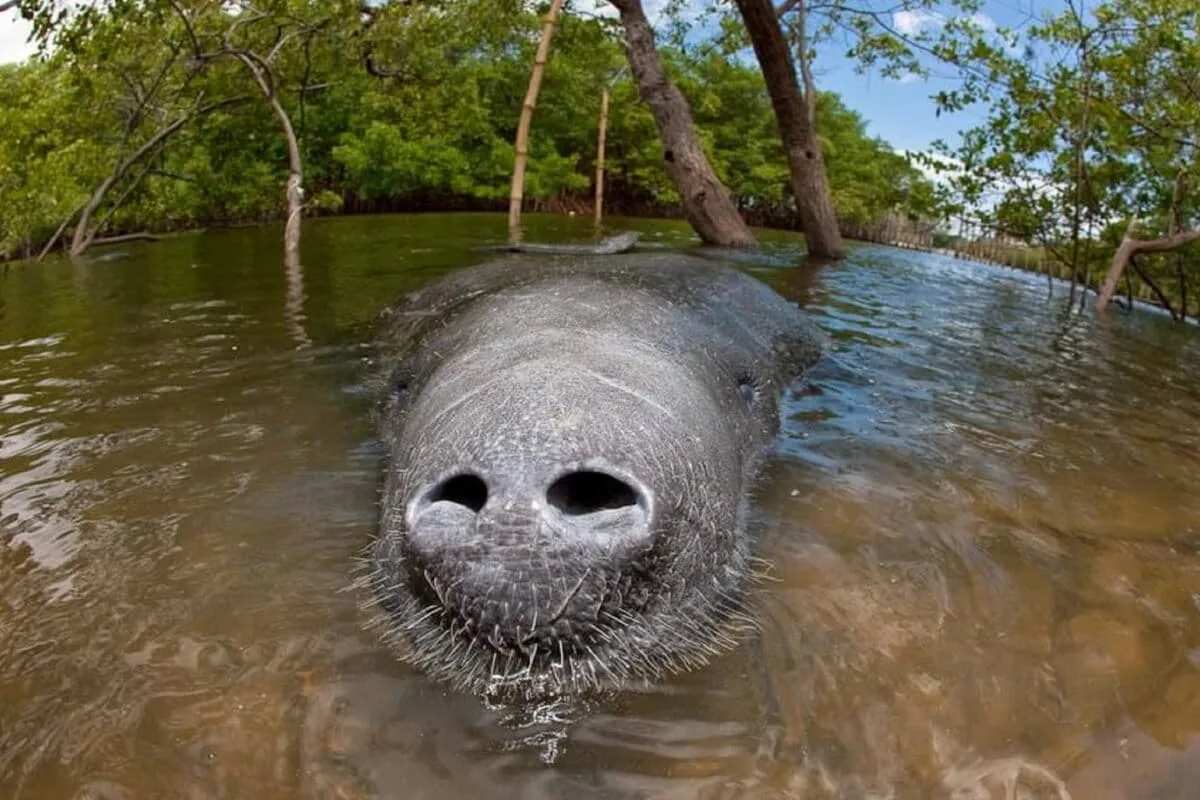
Brazil’s government has approved oil drilling near the mouth of the Amazon River, a move that has sparked alarm among environmentalists and scientists due to the threat it poses to a distinctive population of hybrid manatees. The Brazilian state oil company Petrobras plans to begin seabed drilling in this ecologically sensitive area despite acknowledging that large animals such as manatees may be impossible to rescue in the event of an oil spill.
The manatees inhabiting these waters are not only rare because of their limited numbers but also unique genetically—they are hybrids of the West Indian manatee and the freshwater Amazonian manatee. This population has adapted specifically to the Amazon River estuary environment, making it irreplaceable. Scientists warn that the loss of even a few individuals could severely impact the population’s survival, given their slow reproduction rate and small numbers.

Concerns grew after Petrobras conducted a simulation of its wildlife rescue plan, revealing significant shortcomings such as insufficient rescue equipment and incidents involving rescue boats. Marine biologists emphasize that the size and weight of these manatees—some weighing over 1,500 kilograms—require specialized logistics and large-scale equipment to handle safely. This complicates any potential rescue operations significantly.
The planned drilling area lies within a vast new oil frontier along the Equatorial Margin, estimated to hold billions of barrels of oil, which motivates Petrobras’s push despite environmental risks. Besides manatees, this biodiverse region supports marine birds, turtles, and recently discovered coral reef systems, all at risk if an oil spill occurs.
Environmental experts highlight the vulnerability of the West Indian manatee, listed as a vulnerable species globally, and note that Brazil’s populations face additional pressures from habitat loss and poaching. The hybrid manatees of the Amazon estuary represent a genetic lineage found nowhere else, heightening the ecological stakes of oil exploration in the area.
With the project moving forward after years of environmental licensing debates, questions remain about whether Petrobras can adequately protect the region’s unique wildlife, particularly species difficult to evacuate or rehabilitate after industrial accidents. The situation underscores the ongoing clash between Brazil’s economic interests in oil extraction and conservation efforts in one of the world’s most biodiverse ecosystems.