

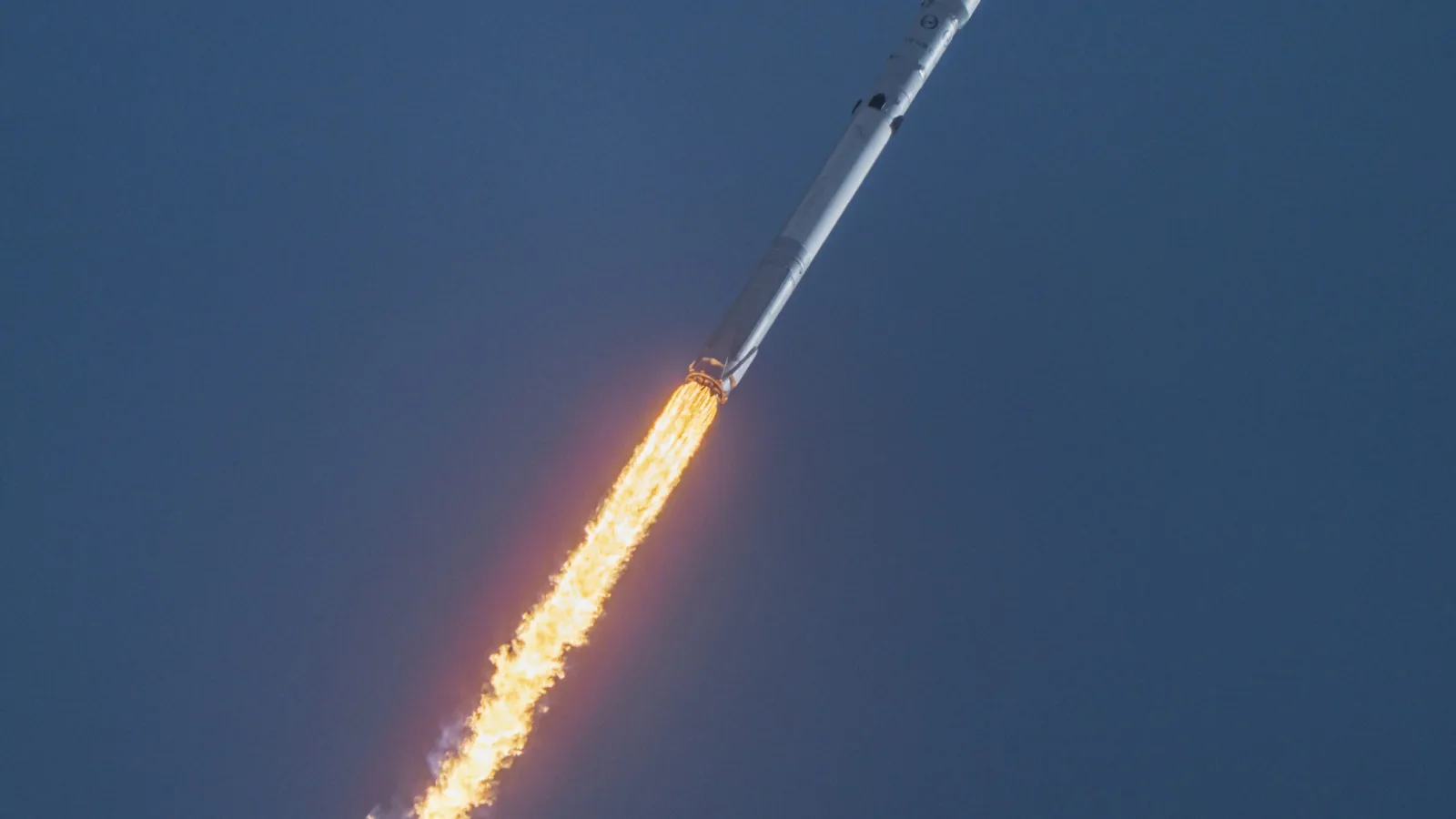
China has introduced its most powerful reusable rocket yet, the Long March 12B, marking a significant milestone in the nation's efforts to catch up in the global race for rocket reusability. The rocket lifted off without prior public announcement from a remote base in northwestern China, demonstrating the state-backed space industry's growing capabilities.
This launch comes amid a mixed record for China's reusable rocket attempts. Earlier efforts by emerging private companies, such as LandSpace and Space Pioneer, ended without successful booster recoveries. LandSpace’s Zhuque 3 booster failed to land safely on its maiden flight, and the government-owned Shanghai Academy’s Long March 12A suffered a similar fate on its test launch. Meanwhile, the Tianlong 3 rocket by Space Pioneer failed to reach orbit, postponing its booster recovery trials to future missions.

The Long March 12B stands out as the tallest reusable rocket deployed by China, rising 72 meters at liftoff. Its development reflects a strategic effort by China’s dominant aerospace institutions, leveraging extensive government resources. This contrasts with the United States, where private companies like SpaceX first pioneered booster landings over a decade ago, establishing a precedent that others only recently matched.
China’s approach to reusable launch vehicles is less predictable and involves multiple players, both state-owned and private. While private firms showed early promise, the Long March 12B launch suggests legacy aerospace organizations may now lead China’s push towards sustainable, cost-effective spaceflight.