

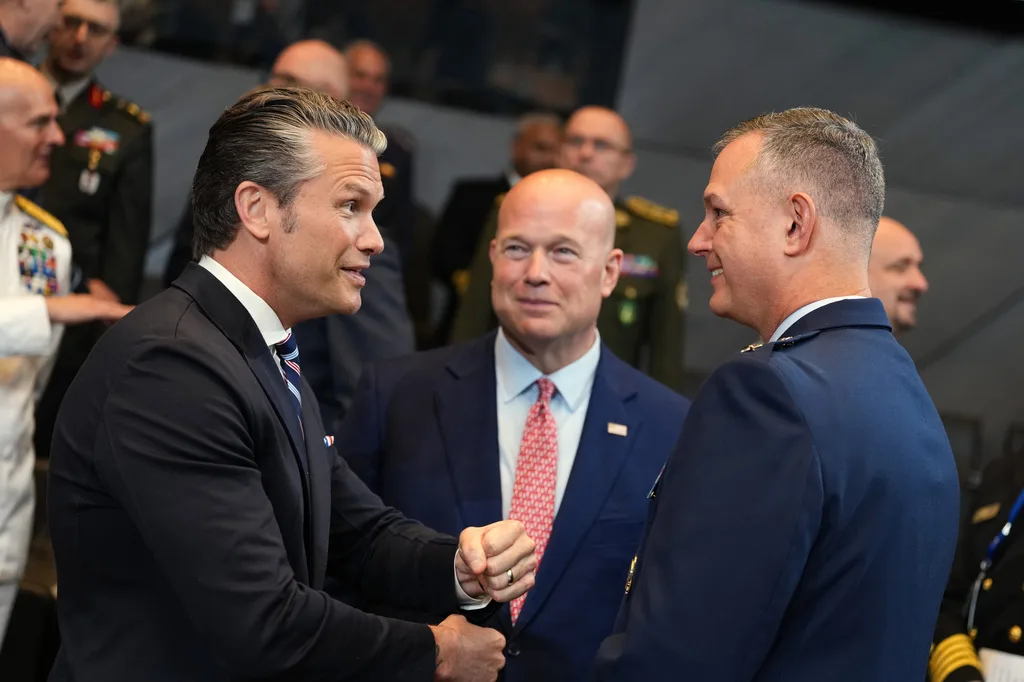
NATO’s highest-ranking commander has acknowledged that European member states have stepped up to cover the majority of military capability gaps created by the United States’ reduction of forces allocated to Europe. This development follows the U.S. decision to scale back its contributions of major equipment, including an aircraft carrier, support vessels, aerial refueling tankers, and multiple fighter jets.
The changes stem from the Pentagon’s reallocation of resources toward emerging threats in the Indo-Pacific region, particularly China, leaving Europe to address its own defense needs more independently. European countries and Canada have since reviewed their military inventories to identify and activate assets that could be rapidly deployed in the event of a crisis.

British forces, as an example, have increased the readiness of a second aircraft carrier and F-35 fighter jets, raising their alert levels to respond swiftly if needed. Meanwhile, NATO’s Force Model—a strategic blueprint outlining the assets available from the alliance’s 32 member nations over the initial six months of a conflict—remains the cornerstone of force planning.
The NATO Force Model guides collective defense efforts in peacetime, crisis, and war, and adapts to changing circumstances across the alliance. Although the U.S. withdrawal leaves certain capability gaps, NATO’s Supreme Allied Commander Europe emphasized that Europe is exploring alternative means with comparable operational impact, signaling ongoing adjustments to force readiness.
NATO’s Secretary General, Mark Rutte, has downplayed concerns over the U.S. drawdown, stressing that the positioning of forces today does not determine allied responses under NATO’s collective defense clause, Article 5. Rutte indicated that the United States could still augment its European forces rapidly if a conflict ignited, citing prior examples such as its deployment response during the Iran war.
Under Article 5, the alliance considers an attack on one member as an attack on all, creating a collective security guarantee. While it does not explicitly mandate the provision of military support, historical precedent and current preparedness suggest a robust multilateral response would follow any aggression against a NATO member.