

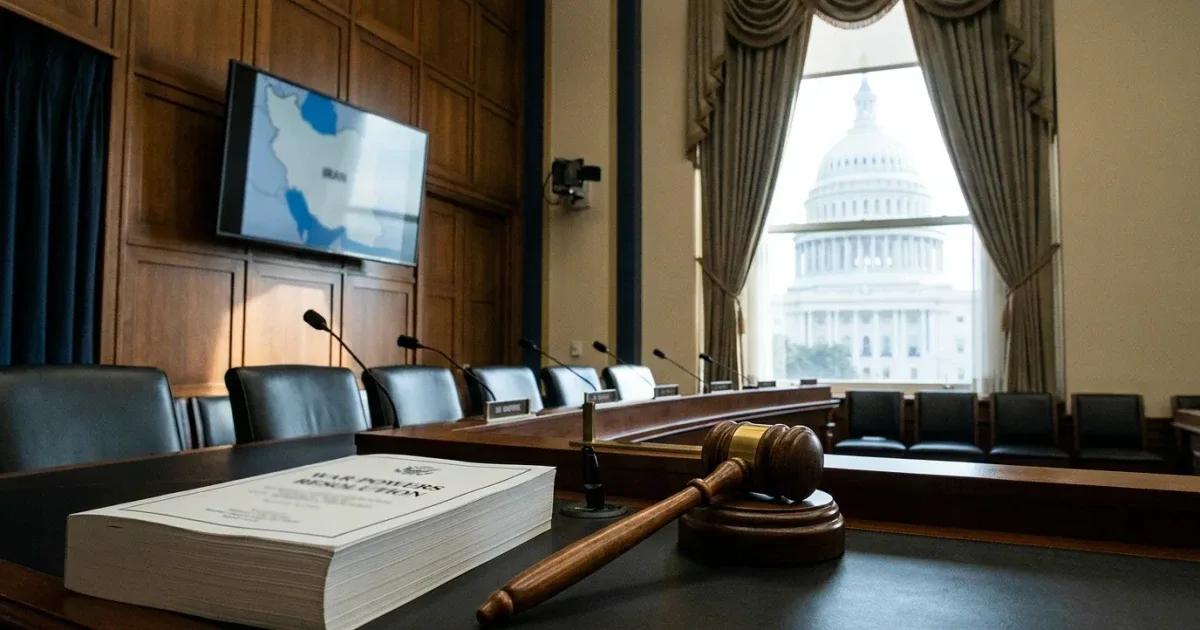
The House of Representatives voted to limit the president’s authority to conduct additional military strikes against Iran, marking a rare congressional move to reassert control over war powers. This measure prevents further unilateral military actions without explicit approval from Congress.
The legislation, introduced as an amendment to a broader bill, responds to heightened tensions between the U.S. and Iran amid recent military exchanges. It requires the president to seek congressional consent before ordering new strikes, reflecting growing bipartisan concern about escalating conflict in the Middle East.

This vote touches on ongoing debates surrounding the War Powers Resolution of 1973, a law aimed at balancing presidential military command with Congress’s constitutional authority to declare war. While presidents have often interpreted their powers broadly, Congress occasionally pushes back to maintain its oversight role, especially when conflict risks expanding without formal declarations.
Support for the measure came primarily from Democrats, though some Republicans joined in, signaling shared apprehension over unchecked executive use of military force. This bipartisanship is notable given the typically divided stance on foreign interventions and executive authority.
The amendment spells out the conditions under which military action against Iran can occur, emphasizing that any new operations require congressional authorization. It follows a series of airstrikes and escalations that brought sharp criticism of the president’s unilateral decisions from members of both parties.
The backdrop to this legislation involves long-standing tensions between the United States and Iran, marked by intermittent military confrontations and diplomatic challenges. Reports from the U.S. State Department highlight ongoing Iranian military activities in the region, contributing to concerns over potential inadvertent escalation without legislative checks.
Public opinion remains divided along partisan lines regarding the Trump administration’s Iran policy. Polling data shows a nation split on the use of force, underscoring the sensitive political context in which this congressional action takes place.