

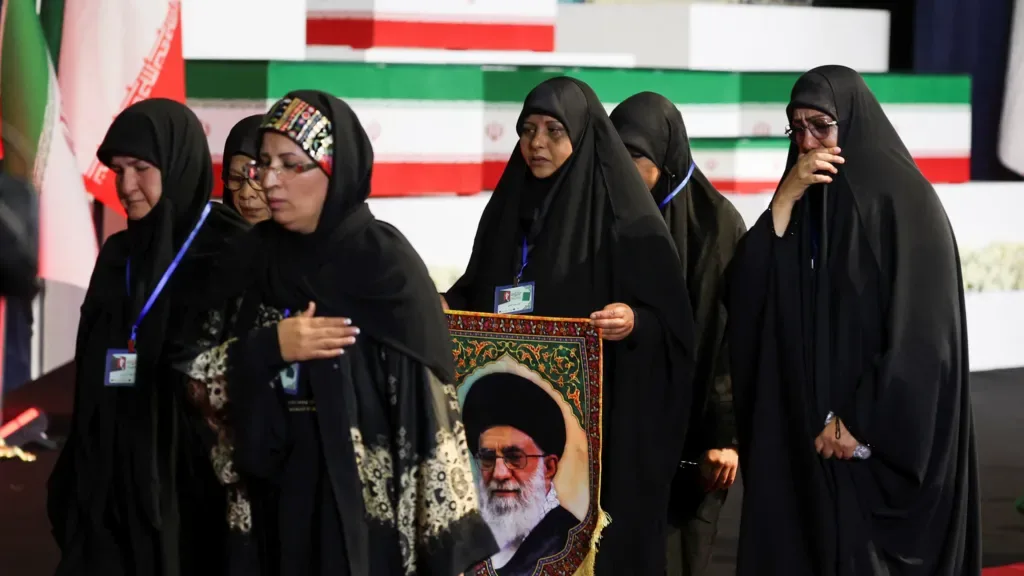
Iran has initiated several days of public mourning and funeral processions for Ayatollah Ali Khamenei, the former Supreme Leader, more than four months after he died in joint US and Israeli airstrikes. His body currently lies in state at Tehran's Grand Mosalla, with burial scheduled in his hometown of Mashhad.
Authorities expect a turnout of 12 to 20 million people for the ceremonies, which Iranian officials have labeled the "funeral of the century." This unprecedented public event reflects the deep reverence held for Khamenei and signals a moment of national mourning amid fragile peace talks between Iran and the United States.

High-profile dignitaries attended the ceremonies at the Grand Mosalla, including Iran’s president and representatives from several countries involved in regional diplomacy, such as Pakistan, Russia, Afghanistan, Iraq, Armenia, Turkey, and Gulf nations like Saudi Arabia, Qatar, and Oman. Pakistan’s Prime Minister, acting as a mediator in US-Iran negotiations, was among those present, underscoring the event’s international significance.
The funeral processions are led by the Tehran-based Mohammad Rasulullah Corps, which has organized a strict schedule allowing visitors a limited time to pay respects. Khamenei’s coffin is displayed on an elevated platform alongside the remains of family members killed in the February strikes, including his infant granddaughter. The corps commander outlined plans to ensure smooth crowd movement, enabling visitors to circulate within 15 to 20 minutes.
As part of the nationwide response, Tehran closed public and private offices for several days and imposed extensive traffic restrictions in the city center. Airspace over the capital was partially closed and will be fully restricted during key funeral days. Following the Tehran ceremonies, commemorations will move to the city of Qom, where a senior Shia cleric will conduct funeral prayers at Jamkaran Mosque, a major religious site.
The attacks that killed Khamenei triggered intense hostilities across the region, but recent ceasefire agreements have created a tenuous pause. US leadership has acknowledged the mourning period, framing it in the context of ongoing peace negotiations. The funerary events, marked by large-scale attendance and international involvement, underscore both Iran’s internal solidarity and the complex geopolitical tensions surrounding the former leader’s death.