

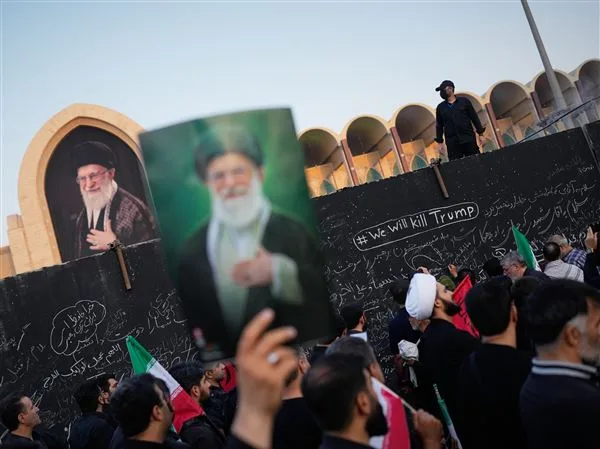
Iran commenced an extended funeral period to honor Supreme Leader Ali Khamenei, who died amid ongoing war-related developments. The ceremonies, observed over several days, underscore the prominence of Khamenei in the nation’s political and religious framework.
The Supreme Leader’s passing follows a period of conflict that has deeply impacted Iran. The funeral gathers officials, religious figures, and citizens in a coordinated series of tributes, reflecting Khamenei’s central role in shaping Iran’s domestic and foreign policies.

Khamenei’s death comes as the country navigates a sensitive transition in leadership during turbulent times. The funeral rituals reinforce the dynastic and religious authority that the office of Supreme Leader holds in Iran’s governance model.
The multi-day funeral procession includes traditional rites, public mourning events, and state-organized memorials. It serves not only as a final homage to Khamenei but also as an occasion for political consolidation among Iran’s leadership.
This period of mourning is significant in affirming continuity within Iran’s theocratic system, given Khamenei’s decades-long influence on the Islamic Republic’s direction. His death in a war context adds a new layer to the complex geopolitical challenges Iran faces.