

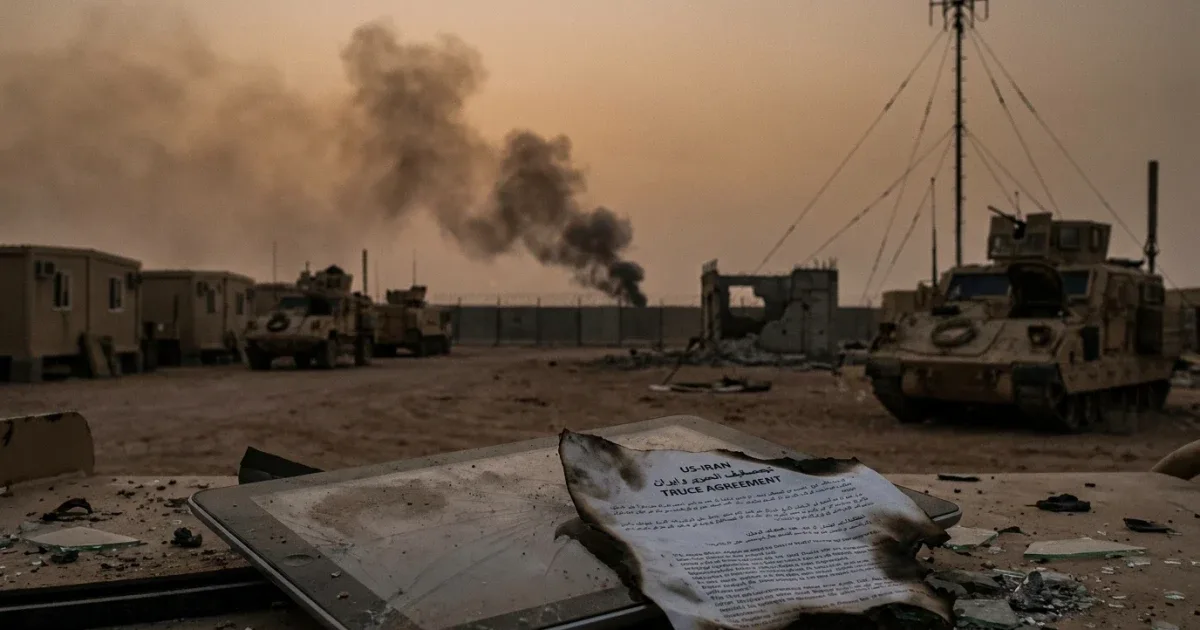
An Iranian ballistic missile struck a US military base in Kuwait, escalating tensions in the Gulf and casting doubt on fragile truce talks between the United States and Iran. Although no US personnel were reported injured, the attack marked a serious escalation amid sensitive negotiations aimed at reducing hostilities in the region.
The missile hit a critical American installation that serves as a strategic foothold in the Gulf, highlighting the volatility of security conditions. US officials quickly responded with retaliatory strikes on Iranian military targets, signaling Washington’s determination to deter further aggression and reassure its regional allies. Enhanced surveillance and heightened force protection measures were implemented across US bases in Kuwait, Bahrain, and Qatar to address immediate threats.

The timing of the incident is significant, occurring while both countries engaged in diplomacy facilitated by regional partners to ease tensions and restore communication. Diplomatic sources express concern that such provocations risk unraveling the tentative peace efforts, as retaliatory actions could spiral into broader conflict.
Iran’s ballistic missile program remains a central issue in Gulf security. With missile ranges capable of striking targets across the Middle East, including key US installations, Iran’s growing arsenal has been closely monitored by US intelligence and international organizations. Since 2020, missile deployments and launches from Iranian forces in the region have increased, contributing to an unstable security environment.
Regional allies, particularly those in the Gulf, quickly condemned the missile strike and urged restraint on all sides. International observers emphasize the importance of adherence to existing arms control agreements and call for renewed diplomatic engagement to prevent further escalation.