

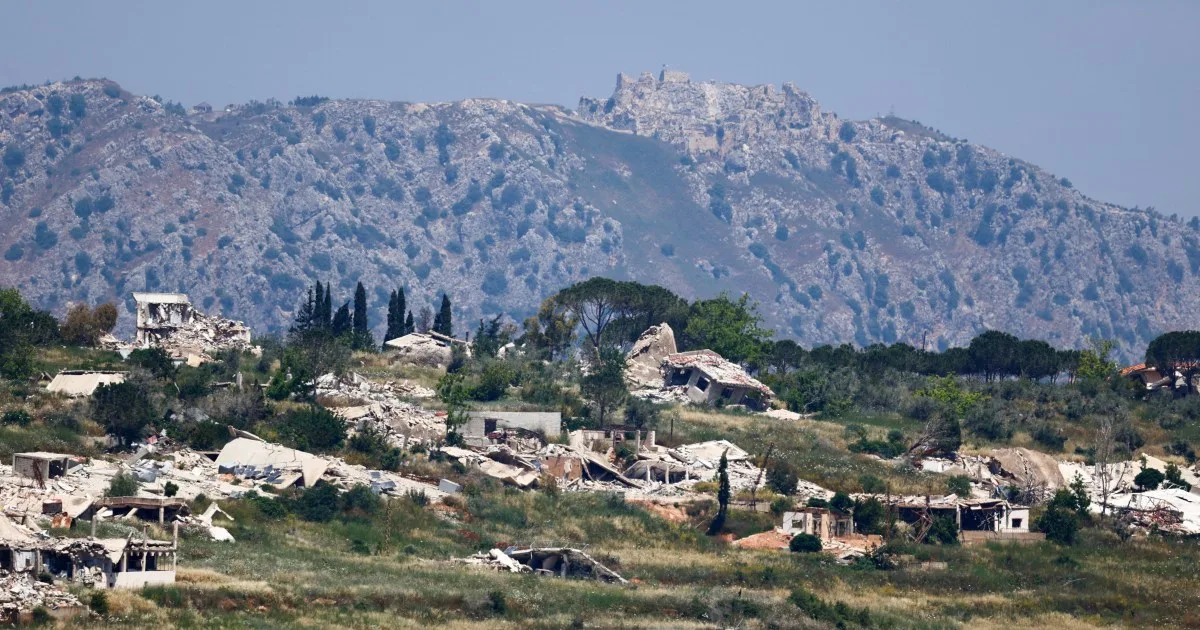
Israeli troops have taken control of Beaufort Castle, a centuries-old fortress perched on a hill in southern Lebanon, marking a significant development in their expanded campaign against Hezbollah. The move comes amid continued fighting that has strained a fragile ceasefire between Israel and Lebanon.
Situated roughly 700 meters above sea level, Beaufort Castle—also known as Qalaat al-Shaqif in Arabic—dates back to the 12th century when Crusaders built it to oversee and control the surrounding territory. Its commanding vantage point overlooks the Litani River and offers a sweeping view stretching into northern Israel, making it a critical military asset.

The castle and the adjacent ridge near Nabatieh, Lebanon’s fifth largest city, have long been strategic military sites due to their elevated terrain. Israeli forces, who previously occupied the area during their 1982 Lebanon invasion and maintained a security zone there until 2000, view the recent capture as essential for monitoring Hezbollah movements and disrupting their infrastructure near the border.
Defense officials emphasized that the reclaiming of Beaufort Castle strengthens Israel’s observational capabilities and secures a pivotal position to counter Hezbollah operations. The site’s historical and tactical significance adds to its value in the complex security environment of southern Lebanon, which continues to experience violent escalations despite diplomatic efforts.
Reports from the region highlight that controlling the castle allows Israeli forces not only to watch large swaths of southern Lebanon but also to reinforce ground advances deeper into the area. The government’s statements and military communications include images of the Israeli flag flying atop the fortress, symbolizing the regained foothold.
Over the past century, Beaufort Castle has switched hands multiple times—from Crusader rulers to Ottoman control—and more recently served Palestinian fighters before Israeli occupation decades ago. Its role as a historical stronghold reflects the ongoing strategic tussle in this border zone.