

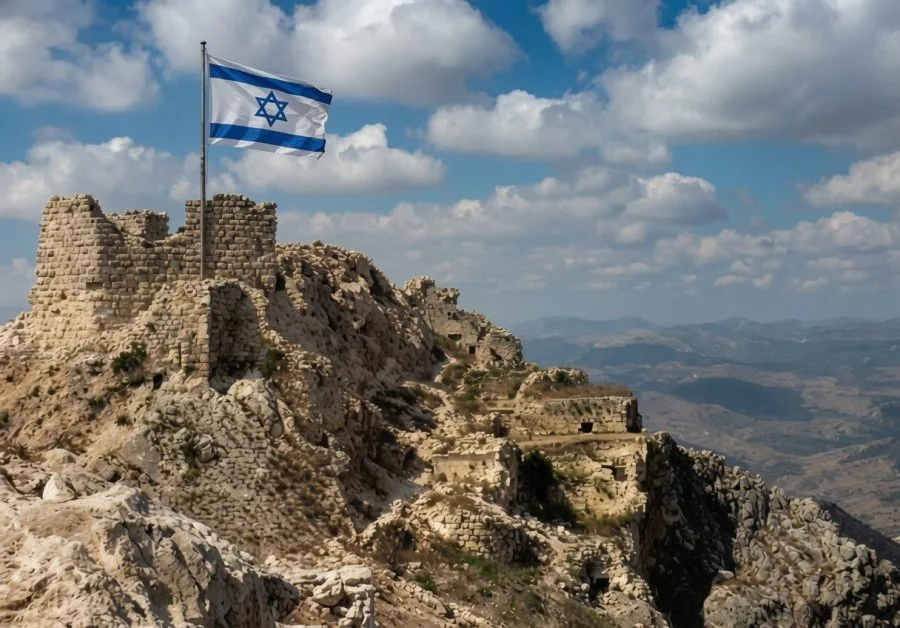
Israeli forces have retaken control of Beaufort Castle, a medieval fortress perched on a strategic cliff overlooking southern Lebanon’s Litani River Valley. This marks a significant moment, representing the deepest Israeli military advancement into Lebanese territory in more than 26 years.
Built during the 12th century Crusades, Beaufort Castle—known locally as Qalaat al-Shaqif—offers commanding views over key terrain that has long held military and symbolic importance. The fortress’s elevated position provides Israel with a vital vantage point to monitor activities in southern Lebanon and northern Israel, especially amid ongoing tensions with Hezbollah.

Beaufort Castle embodies nearly a millennium of regional conflict and shifting control among various powers. Originally constructed by Crusaders during their campaigns to retake the Holy Land, the fortress subsequently passed through the hands of Muslim rulers, the Mamluks, Ottoman Empire, French colonial forces, Israel, and modern Lebanon. Each of these transitions reflects the broader, layered history of this geopolitically sensitive zone.
The Crusades, which gave rise to the fortress’s initial construction, were motivated by religious and territorial ambitions emerging in Europe’s Christian world during the late 11th century. After Muslim conquests across the Levant in the 7th century established Islamic control over regions including Jerusalem and Lebanon, European powers launched a series of military pilgrimages aiming to reclaim these lands. The capture and fortification of sites like Beaufort Castle served as critical footholds during these prolonged struggles.
More recently, the Israeli Defense Forces (IDF) vacated Beaufort Castle in 2000 as part of a broader withdrawal from southern Lebanon. Its recapture signals a renewed emphasis on securing strategic high ground amid conflict with Hezbollah and addresses longstanding security concerns along the Israel-Lebanon border.
The fortress’s layered past underscores its enduring role as a symbol of contested sovereignty and religious significance. Christians, Muslims, and Jews have all vied for its control, making Beaufort Castle a testament to the region’s complex history of conquest and cultural intersection.
Newly released footage shows Israeli Golani Brigade soldiers securing the site, highlighting the tactical importance of the position in ongoing military operations. Despite its current occupation, Beaufort Castle’s history suggests its control remains subject to the ebbs and flows of regional power, with no single power maintaining permanent dominion over its walls for long.