

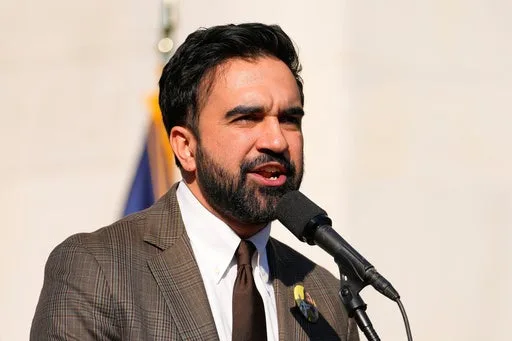
New York City Mayor Zohran Mamdani chose not to participate in the city’s annual parade celebrating Israel’s founding—an event historically attended by successive mayors and political leaders. This departure from decades of precedent reflects Mamdani’s public backing of Palestinian rights and criticism of the Israeli government.
During a recent news briefing, Mamdani reiterated that he had committed during his campaign not to attend the parade and affirmed that he had made his stance on Israel’s policies clear. However, he emphasized his commitment to ensuring that the parade proceeded peacefully, pledging a strong police presence. New York Police Commissioner Jessica Tisch, who is Jewish, did attend the event and defended her decision as independent of the mayor’s.

The Israel Day parade, which celebrates the birth of Israel in 1948, traditionally draws large crowds waving Israeli flags along Fifth Avenue. This year’s event took place shortly after the city marked Nakba Day—commemorating the displacement of Palestinians during the 1948 Arab-Israeli war—with a video released by Mamdani’s office. The video, the first of its kind from a sitting New York City mayor, featured personal testimony from a Palestinian woman recounting the trauma of displacement, a gesture that intensified criticism from some Jewish leaders.
Opponents of Mamdani’s approach accused him of antisemitism, interpreting his absence and the Nakba video as politically charged. Rabbi Marc Schneier, a prominent figure advocating for Jewish-Muslim relations, condemned the mayor’s decision as disrespectful to Jewish New Yorkers and dismissed the Nakba video as one-sided propaganda. Schneier and others expressed concern that the video omitted key context about the concurrent displacement experienced by Jewish communities.
The parade also attracted members of Israel’s hardline government, including Finance Minister Bezalel Smotrich, whose visit followed reports of an International Criminal Court investigation. His attendance underscored the event’s significance within the Israeli political landscape and added another layer of tension surrounding the mayor’s absence.
Mamdani’s refusal to attend the parade and his office’s recognition of Nakba Day mark a clear political shift in how New York City’s leadership engages with the Israeli-Palestinian conflict, highlighting deep divisions within the local community and beyond.