

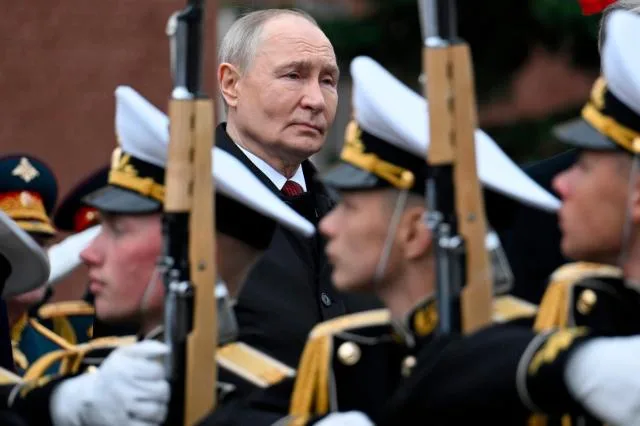
With Russian advances in Ukraine slowing to a near halt, President Vladimir Putin is gearing up for a significant escalation in the conflict, particularly by intensifying missile attacks on Kyiv. This move aims to bolster his diminishing approval ratings at home and counter growing war fatigue among the Russian population.
Amid warnings of “consistent and systematic” missile strikes on the Ukrainian capital, Moscow has urged foreign embassies to evacuate Kyiv, signaling the Kremlin’s plans to expand its bombardment despite potential international condemnation. Earlier military exercises involving Russia’s nuclear forces and stern messages to European allies underscore Putin’s strategy to raise the stakes in response to Ukraine’s mounting resistance and growing support from Western countries.

Following substantial territorial gains last year, Russian forces have encountered strong Ukrainian counterattacks along the extensive frontline, leading to a protracted stalemate. Analysts from the Institute for the Study of War note that the momentum currently favors Ukraine, with innovative tactics employed to break the static nature of the battlefield. This impasse undermines Putin’s objective of swiftly taking control over the eastern Donetsk region, where Ukrainian forces remain entrenched and reject any withdrawal demands tied to ceasefire talks.
In parallel, Ukraine has escalated its long-range strikes against critical Russian infrastructure, targeting energy facilities and arms factories deep within Russian territory. These attacks have inflicted increasing damage and forced Russia to adjust its military parade plans due to fears of drone strikes. The vulnerability of Moscow’s suburbs was dramatically exposed in a recent large-scale drone attack that resulted in civilian deaths, challenging Kremlin narratives that the war poses little direct threat to ordinary Russians.
In response to Ukraine’s enhanced drone capabilities, Russian lawmakers passed legislation requiring banks to fund drone-jamming installations on their premises. This reflects Moscow’s recognition of the growing risks posed by Ukrainian deep strikes and its attempts to bolster homeland defense against such incursions.