

President Donald Trump declared that Israel and Hezbollah have agreed to scale back hostilities following heightened conflict marked by Israeli incursions into southern Lebanon and renewed rocket attacks. The announcement came after Trump held discussions with Israeli Prime Minister Benjamin Netanyahu and engaged indirectly with Hezbollah representatives through mediators.
Despite the president’s statement, missile launches from Lebanon were detected shortly afterward, prompting Israel to caution northern communities to seek shelter. Israeli forces continued strikes targeting Hezbollah positions in Beirut’s southern suburbs, known as Dahiyeh, an area widely regarded as a stronghold of the militant group.

The escalation unfolded against the backdrop of disputed ceasefire terms. A joint statement from Netanyahu and Defense Minister Israel Katz described the attacks on Beirut’s southern suburbs as a response to repeated ceasefire violations by Hezbollah and ongoing rocket assaults on Israeli cities. The Israeli military urged residents to evacuate Dahiyeh, warning of possible further assaults if attacks on Israeli communities persisted.
Hezbollah initially agreed to halt attacks when a ceasefire took effect in mid-April, but resumed rocket fire after Israel conducted strikes it described as self-defense. The tensions complicate efforts to extend the ceasefire connected to the broader Iran conflict, with Tehran seeking to include Lebanese territory in any agreement.
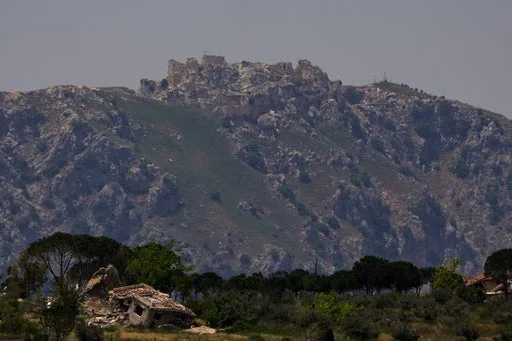
The recent airstrikes inflicted casualties in southern Lebanon, including six deaths reported near the city of Nabatiyeh, with damage extending to strategically important sites such as Beaufort Castle. Civilians in southern Beirut fled the area amid fears of intensified military operations, illustrating the human toll of the confrontation.