

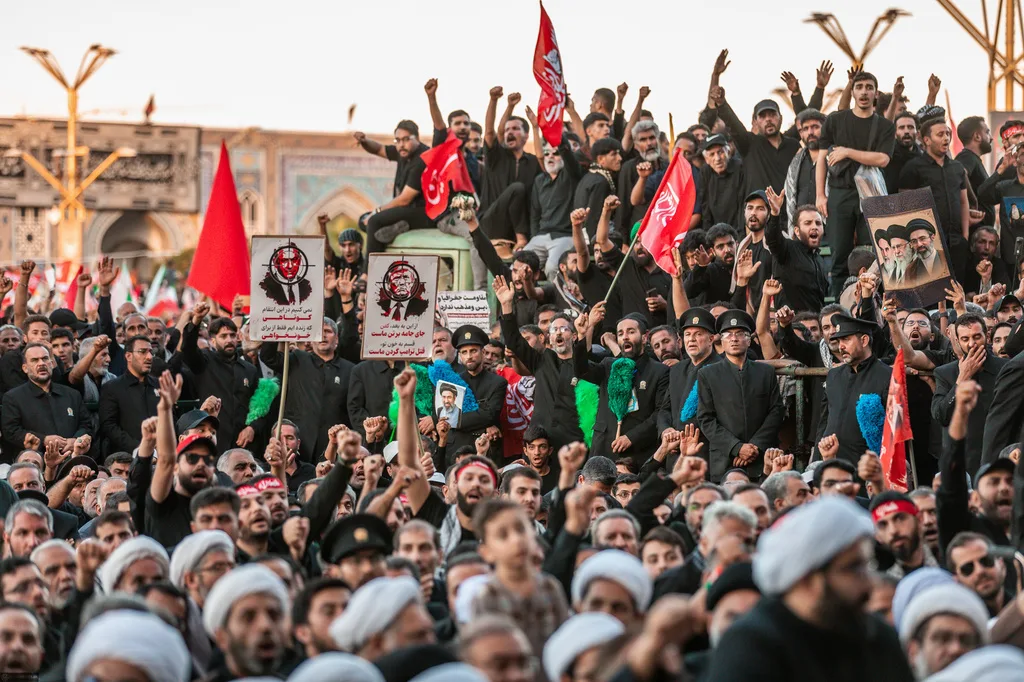
In the wake of Iran’s Supreme Leader Ayatollah Ali Khamenei’s funeral, where mourners openly called for the killing of U.S. President Donald Trump, tensions between Washington and Tehran sharply intensified. Trump publicly threatened Iran with a barrage of missile strikes, emphasizing that thousands of missiles are “locked and loaded” targeting the Islamic Republic. He framed these threats as retaliation for calls to assassinate him during the funeral, signaling a hardening U.S. stance amid ongoing hostilities.
The threat came amid a fragile situation in the Strait of Hormuz, a vital maritime passage subject to repeated attacks and counterattacks. Iran insists on controlling shipping through the strait and aims to levy charges on passing vessels, a posture that has complicated any diplomatic resolution to the conflict that began in late February. Senior U.S. officials have demanded Tehran publicly confirm the strait remains open and that it will refrain from attacking ships, a condition Tehran has resisted.

Despite escalating violence, both sides have maintained some diplomatic channels. Iranian Foreign Minister Abbas Araghchi traveled to Oman for talks, while Qatari mediators engaged with Tehran officials just days earlier. Still, recent U.S. airstrikes targeting Iranian assets and Iran's retaliatory attacks against Gulf Arab states underline the volatile environment.
Iran’s Supreme Leader Mojtaba Khamenei, son of the deceased Ayatollah and not yet publicly seen since the conflict escalated, reinforced Iranian vows for vengeance. In a televised statement, he declared avenging his father’s death is a national mandate that “must certainly be carried out.” This rhetoric continues to fuel reciprocal animosity that complicates any ceasefire efforts.
On the economic front, Iranian officials accused the U.S. of breaching an interim agreement by revoking waivers enabling Iran to sell crude oil in U.S. dollars. Washington argued the decision responded directly to Iran’s attacks on commercial vessels in the Hormuz Strait. This diplomatic and economic friction adds another layer of tension to the standoff.
Trump’s statements notably included an invocation of Arabic religious phrasing, a move criticized by civil rights groups for mocking Islam. His threats extended beyond military retaliation, warning of the potential destruction of Iranian civilization, escalating rhetoric in a conflict already marked by deep regional and ideological divides.