

Britain targeted a group of Russian people and scientific institutes with sanctions for their involvement in developing chemical weapons used in two high-profile poisonings. The measures mark a firm response to alleged Russian state-backed chemical attacks against opposition leader Alexei Navalny and former spy Sergei Skripal.
The UK government identified seven individuals and two research bodies connected to producing the epibatidine toxin used to poison Navalny in an Arctic penal colony, as well as the Novichok nerve agent deployed in the 2018 Salisbury attack. That attack severely harmed Skripal and his daughter and caused the death of a local woman, bolstering accusations of Russia’s breach of international law.

Among those sanctioned are the Russian state scientific research institute SC Signal and the State Scientific Research and Testing Institute for Military Medicine (GNIII VM). These organizations are accused of central roles in creating and handling the banned chemical agents. The UK Foreign Secretary condemned Russia’s repeated use of chemical weapons as a serious threat to global security and international norms.
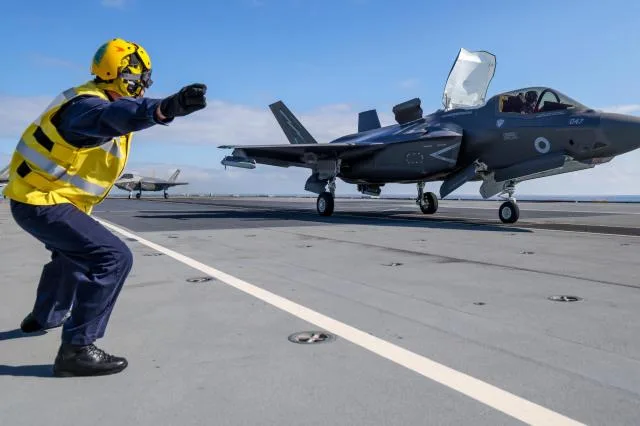
Simultaneously, British defense officials highlighted increased Russian naval provocations near UK forces. Recent Royal Navy footage shows F-35 fighter jets intercepting a Russian Bear-F maritime patrol plane flying dangerously close to the HMS Prince of Wales carrier strike group in the Norwegian Sea. The Russian aircraft dropped numerous sonobuoys—sonar devices used to detect submarines—within close proximity to the British vessel, actions described by the UK Ministry of Defence as unsafe and unprofessional.
The Royal Navy carrier strike group operates in the Arctic region as part of wider NATO missions, underlining heightened military tensions between Russia and Western forces in northern waters. The British jets escorted the Russian plane away from the area, emphasizing the UK’s vigilance in protecting its naval assets amid growing geopolitical friction.