

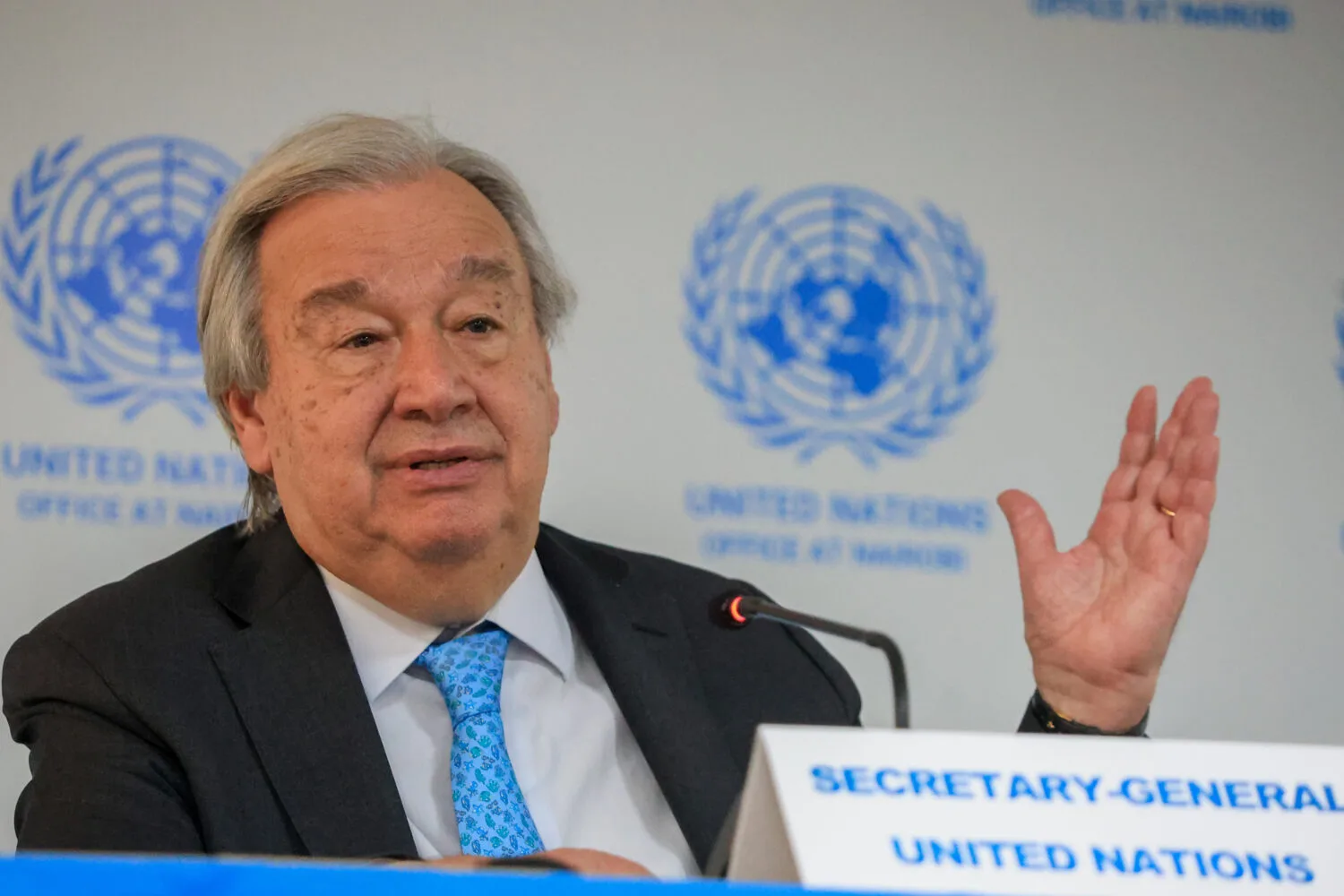
The United Nations is preparing to reshape its role in southern Lebanon as the current peacekeeping mission, comprising over 8,000 troops, is set to conclude at the end of the year. Secretary-General Antonio Guterres has submitted three distinct options to the Security Council aimed at continuing efforts to manage the longstanding conflict between Israel and Hezbollah, which remains unresolved despite decades of intermittent hostilities and a 2006 ceasefire agreement.
At the heart of these proposals is the continuation of UN military presence along the boundary between Israel and Lebanon, known as the Blue Line. This boundary monitoring has been crucial in maintaining a fragile calm, and its significance is underscored by recent attacks that led to the deaths of six peacekeepers. The new options suggest scaling the force from nearly 5,500 personnel to just under 2,000, including some unarmed observers, ensuring flexibility while maintaining credible oversight.

All three approaches emphasize robust support for the Lebanese Armed Forces, advocating their deployment throughout Lebanon to assert the country’s sole military authority, in line with the 2006 Security Council resolution that calls for Hezbollah’s disarmament and Israeli troop withdrawal. Guterres stressed that a uniformed UN presence is essential to facilitate de-escalation, promote dialogue, enhance coordination, and bolster Lebanese state authority in the region.
The Secretary-General also proposed strengthening the role of the UN’s Special Coordinator for Lebanon, who oversees diplomatic initiatives tied to the peace process and the resolution’s implementation. This effort comes after the Security Council’s unanimous decision earlier this year—driven by pressure from the United States and Israel—to end the current peacekeeping mission, known as UNIFIL, and demand a new strategy.
UN spokesperson Stephane Dujarric confirmed that the Secretary-General is urging the Security Council to quickly agree on one of the outlined military options to ensure continuity in peacekeeping and political support. The outcome will influence the UN's capacity to manage tensions in a region where violence has periodically surged despite existing frameworks.