

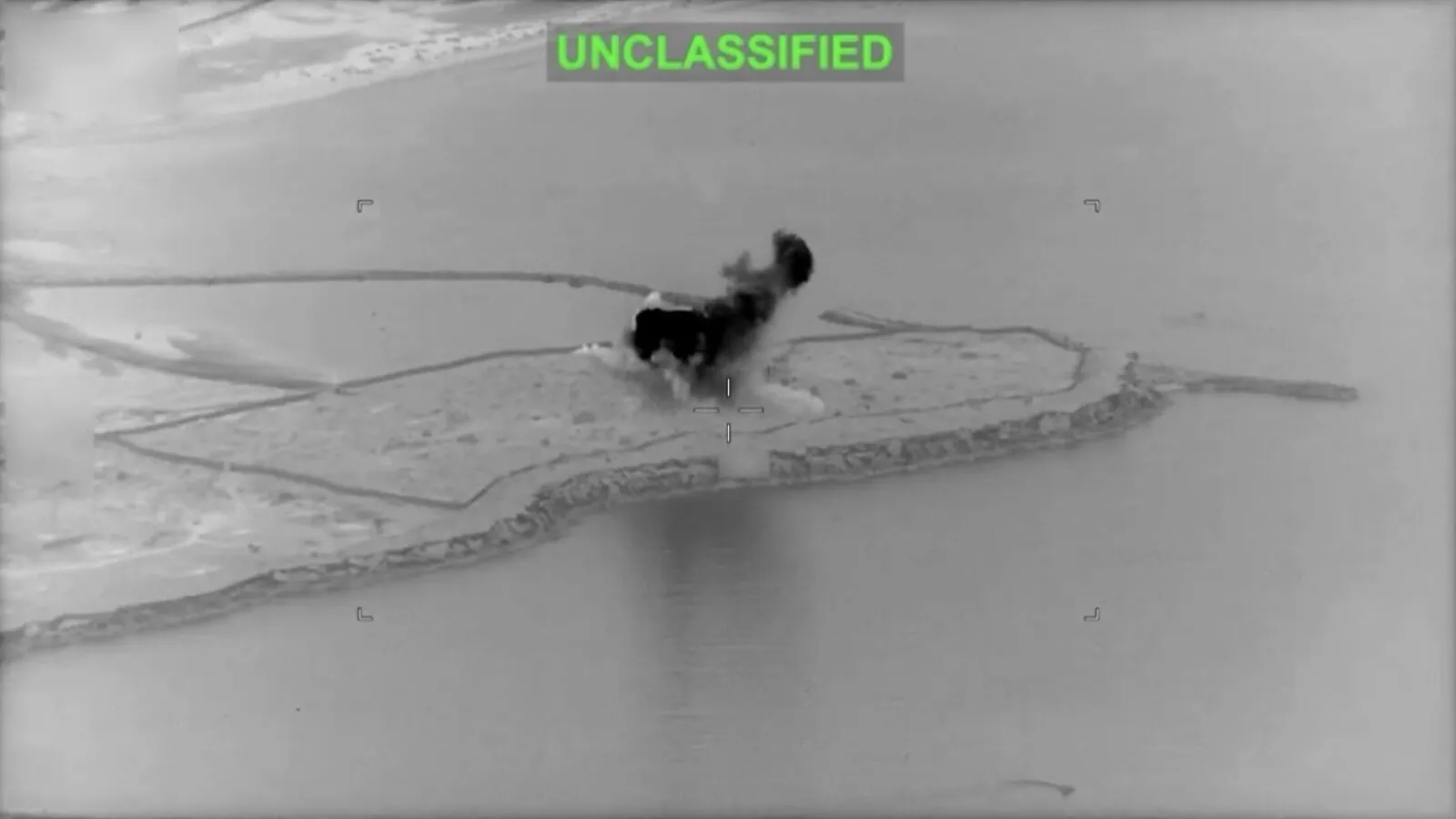
The U.S. military responded swiftly with deliberate strikes against Iranian targets following attacks on commercial shipping in the Strait of Hormuz, a critical international maritime corridor. The operations were launched to impose costs on Iran for what the U.S. described as unwarranted aggression toward civilian-crewed vessels navigating this vital waterway.
U.S. Central Command publicly confirmed that these strikes targeted a range of Iranian military facilities integral to threatening maritime traffic. The list included air-defense systems, coastal surveillance, surface-to-air missile sites, drone-launch platforms, and port infrastructure—all components used to hinder safe passage and intimidate commercial shipping operators.

The attacks by Iranian forces on three commercial ships occurred just days after a fragile memorandum of understanding intended to ensure safe transit through the Strait was signed, highlighting Tehran’s disregard for diplomatic efforts. This renewed hostility from Iran compelled the U.S. to undertake military action aimed specifically at dismantling the capabilities facilitating these repeated assaults on international shipping.
The strategic importance of the Strait of Hormuz—through which a significant percentage of the world’s oil passes—amplifies the implications of these events, underscoring the potential for broader regional instability. The U.S. strikes serve as a clear demonstration of American commitment to protecting freedom of navigation and maintaining order in a region critical to global energy supplies.
According to U.S. officials, the operation reflects a precise, calibrated effort to degrade Iran’s military capacity to interfere with commercial vessels rather than a broader political message. By focusing on the systems directly involved in the maritime attacks, the U.S. has signaled a direct consequence for Iran’s aggressive actions that threaten international maritime security.