

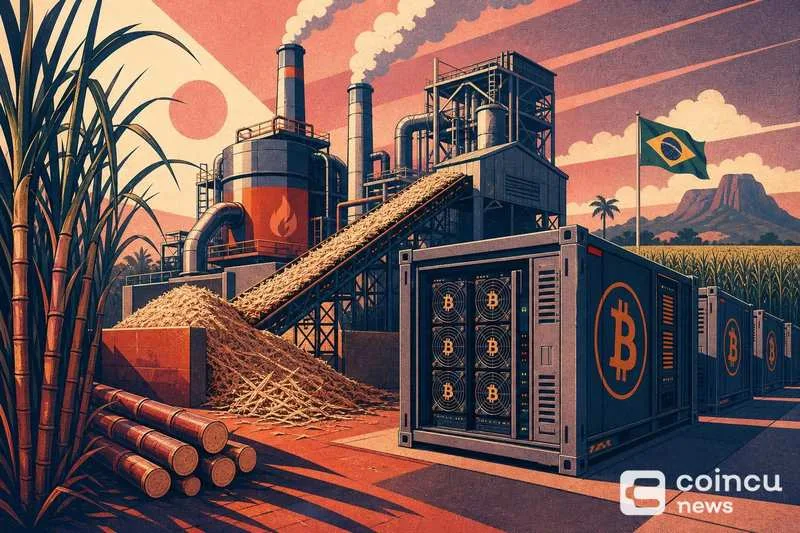
Adecoagro, an agricultural company backed by Tether, announced plans to develop a Bitcoin mining operation fueled by bagasse, the fibrous residue left after sugarcane processing. This initiative leverages Adecoagro’s existing sugar-and-ethanol infrastructure in Brazil to generate renewable energy for mining hardware, aligning with Tether’s ambitions to diversify into sustainable real-economy assets beyond stablecoins.
Bagasse serves as a biomass fuel within Adecoagro’s current operations, where it is burned in cogeneration plants to produce electricity and steam for sugar and ethanol production. Using this renewable byproduct to supply continuous, low-cost power for Bitcoin mining could lower energy expenses by repurposing surplus electricity generated during routine agricultural cycles. While the project remains in planning stages, details on capacity, timelines, and technical specifications have yet to be disclosed.

Tether’s investment in Adecoagro reflects a broader strategic push into infrastructure that connects traditional industries with blockchain technology. By backing an agricultural energy source for proof-of-work mining, Tether aims to extend its stablecoin business into renewable energy and digital asset integration. The move highlights a growing trend among stablecoin issuers exploring complementary ventures into crypto mining and sustainable energy sectors.
Brazil’s status as one of the largest global sugarcane producers positions it as an ideal location for this biomass-driven mining operation. Adecoagro’s existing mills with cogeneration capabilities can provide a steady supply of electricity from bagasse, supported by the country’s favorable climate allowing year-round harvesting. This enhances the feasibility of biomass-powered mining infrastructure compared to regions with seasonal agricultural cycles.
The project was publicized through Nasdaq’s press release network, highlighting the growing focus on renewable-energy solutions within the Bitcoin mining industry amid ongoing environmental scrutiny. By combining agricultural waste power generation with crypto mining, this initiative presents a novel approach to sustainable blockchain operations.