

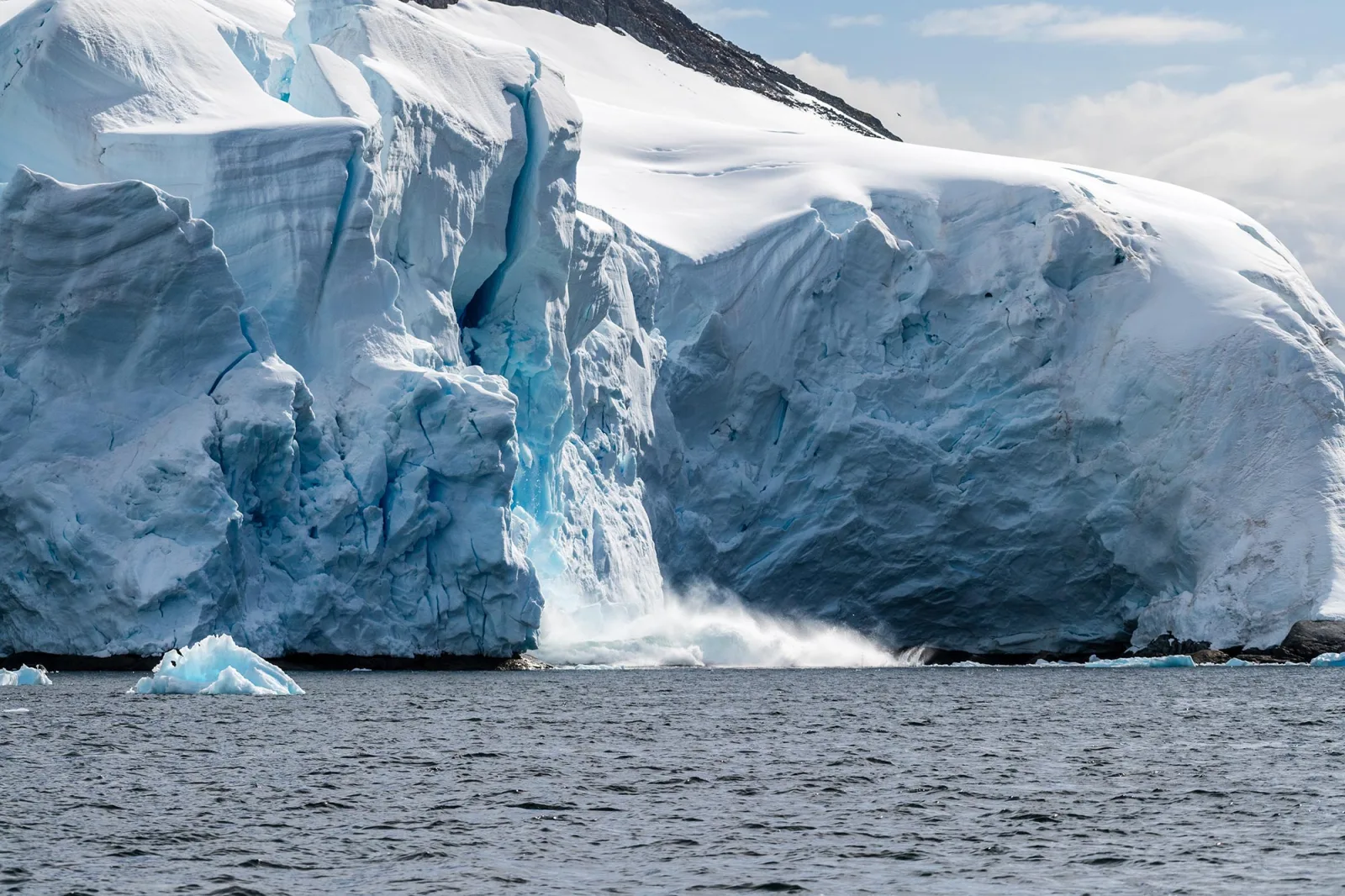
Antarctica’s vast ice sheet crossed a crucial climate threshold approximately one million years ago, shifting to a state of heightened sensitivity to global climate fluctuations. This breakthrough finding sheds new light on how the continent’s ice mass has historically reacted to environmental changes, offering valuable insights for forecasting future sea level rise.
The study, published in Nature Geoscience, highlights that during the Mid-Pleistocene Transition—a period marked by longer and more severe ice ages—Antarctica’s ice sheet transformed fundamentally. Prior to this transition, the ice sheet showed a more stable and less reactive behavior toward climate variations. After crossing the threshold, however, it became far more responsive, amplifying the effects of atmospheric and oceanic changes on its volume and dynamics.

Researchers from the IBS Center for Climate Physics in South Korea reconstructed climate conditions over the past three million years using an advanced paleoclimate model that simulates global temperature and precipitation patterns. They then combined this data with an ice-sheet model from Penn State University, which accounts for Antarctic ice thickness, flow, and temperature, including the behavior of floating ice shelves in key regions like the Ross and Weddell Seas.
The integrated simulation employed one of South Korea’s fastest supercomputers, providing a detailed and physically consistent view of ice sheet evolution in response to varying carbon dioxide levels and other climatic drivers. Model results reveal that before one million years ago, Antarctic ice volume changes showed weaker nonlinear sensitivity to CO₂ fluctuations. After this point, the ice sheet responded with sharper contractions and expansions correlating with atmospheric changes.
This enhanced climate sensitivity indicates that Antarctica’s ice mass played an increasingly prominent role in glacial cycles during the Mid-Pleistocene Transition, contributing substantially to global sea level variability. The findings help clarify why ice ages intensified and became more prolonged in that era and suggest that future warming scenarios may prompt significant Antarctic ice loss, affecting global coastal regions.
Understanding Antarctica’s ice sheet responsiveness is essential for improving sea level rise projections under ongoing climate change. This study’s approach—linking reconstructed paleoclimate data with dynamic ice sheet models—represents a crucial step toward refining how scientists estimate ice sheet stability and its contribution to ocean levels over both past and future timescales.