

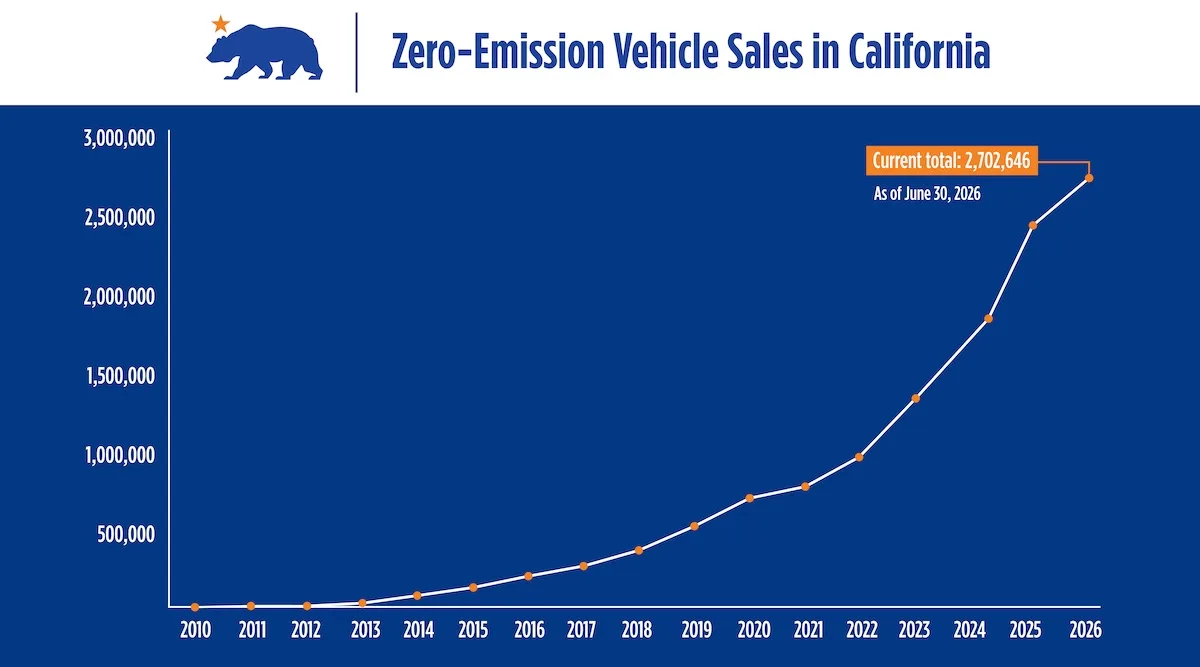
California’s electric vehicle market demonstrated resilience in the second quarter of 2026, continuing a sales recovery even as the federal government aggressively challenged state-level clean vehicle policies. This contrasts sharply with moves by the Biden administration’s predecessor to undercut incentives and restrict the state’s authority on emissions standards.
The origin of the federal pushback traces to the “One Big Beautiful Bill Act” (OBBA), passed last year by the Republican-controlled Congress with no Democratic support. A key provision of OBBA was the premature termination of the $7,500 federal EV tax credit, which expired at the end of September 2025. Following this, EV sales nationally, including in California, initially slumped, underscoring the significance of financial incentives on consumer adoption.

California’s situation is especially notable because it has long led the nation in electric vehicle sales and boasts some of the country’s most rigorous emissions standards. These standards originate from the state’s historic authority under the Clean Air Act, which has allowed California to enforce stricter pollution requirements than the federal baseline through a system of waivers granted by the Environmental Protection Agency (EPA).
However, under the Trump administration, the EPA sought to roll back this longstanding arrangement. Attempts included transforming California’s emissions waivers into formal rules subject to Congressional approval—politically unlikely to succeed given Republican opposition. This move aimed to dismantle California’s unique regulatory power that supports aggressive climate initiatives and EV adoption.
Last year, the EPA failed to block California from enforcing these standards, but efforts persisted. The shift from waivers to rules was a strategic effort to entangle the state’s policies in Congressional scrutiny and legislative gridlock. Among the waivers targeted was one establishing California’s 2008 greenhouse gas emissions standards, which have been central to the state’s clean vehicle framework.
Despite these federal headwinds, California Governor Gavin Newsom has maintained the state’s commitment to clean transportation goals, reinforcing policies that continue to propel EV sales upward through 2026. This ongoing growth reflects the broader alignment of state government, automakers, and consumers toward zero-emission vehicles, defying federal challenges.
The California Electric Commission (CEC) data affirms this trend, showing that EV registrations climbed after the initial impact of the federal tax credit’s expiration. This rebound suggests that the market’s momentum and state-level incentives may offset some federal disruptions.