

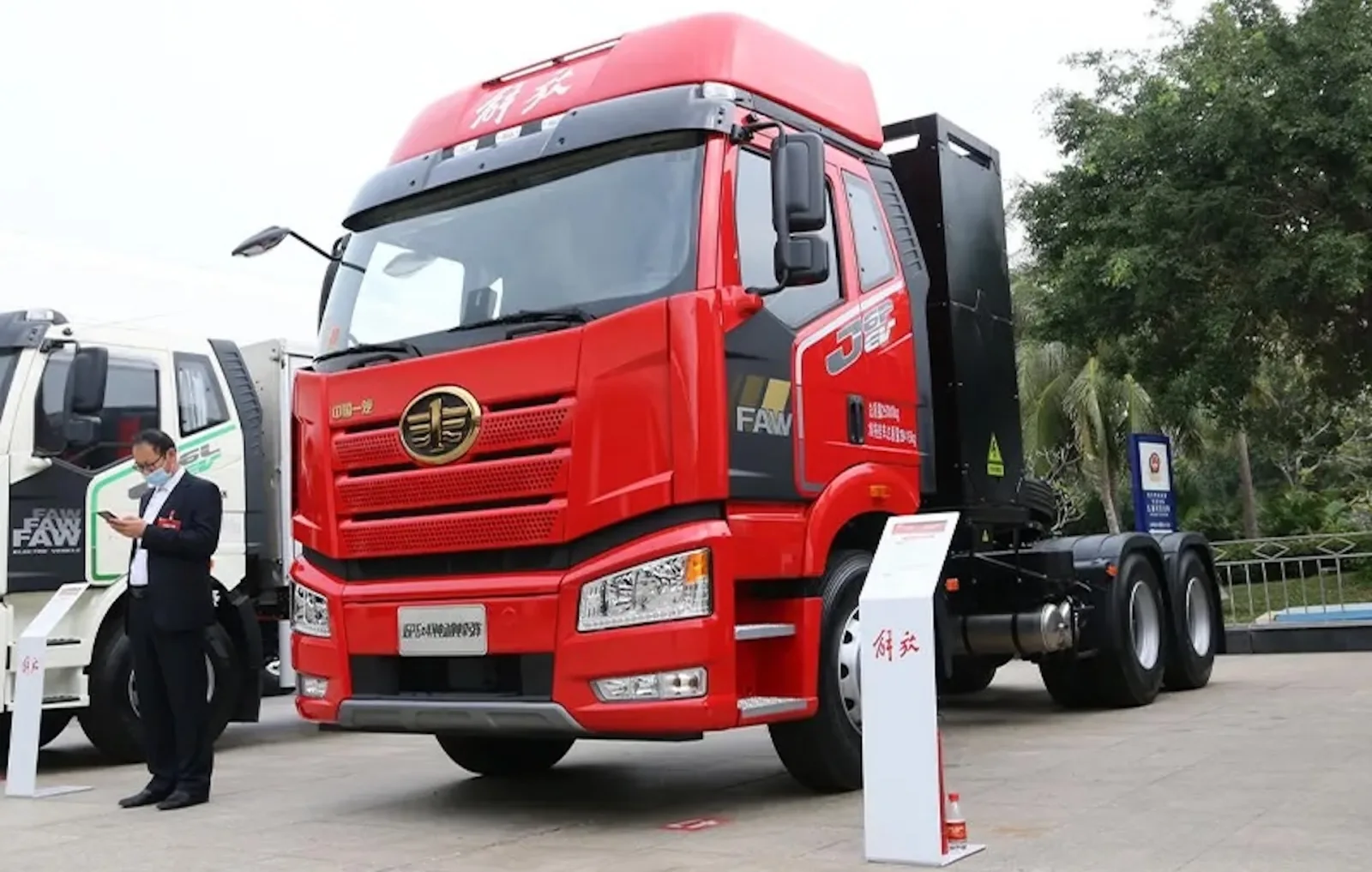
A recent trial demonstrated that a sodium-ion battery installed in an electric freight truck retains more than 90% of its usable capacity even at temperatures as low as minus-40 degrees Fahrenheit. This breakthrough challenges longstanding limitations faced by lithium-ion batteries, which typically struggle with efficiency and range loss in extreme cold conditions.
The test involved a FAW Jiefang J6P electric tractor unit equipped with a 339-kilowatt-hour sodium-ion battery from Hina Battery. FAW Jiefang, part of the state-owned FAW Group in China, emphasized that this battery is well-suited to meet the demands of cold regions in Northeast and Northwest China. The technology could unlock new possibilities for zero-emission freight transport in harsh winter environments.

Beyond cold-weather resilience, the battery offers practical benefits that address industry needs. A full charge takes approximately 20 to 25 minutes, enabling quick turnaround times for logistics operations. The pack is also engineered to withstand more than 8,000 fast-charge cycles, which could reduce downtime for high-mileage freight fleets and support more consistent delivery schedules during severe winters.
The adoption of sodium-ion batteries could also ease raw material constraints. Sodium, derived from abundant sources like table salt and seawater, is far more plentiful than lithium, cobalt, or nickel, materials traditionally used in lithium-ion cells. This abundance might lead to more sustainable and cost-effective battery production in the future.
However, the sodium-ion chemistry presents a trade-off: it stores less energy per unit weight compared to lithium-ion cells. Hina Battery’s current sodium-ion cells achieve energy densities exceeding 165 watt-hours per kilogram, but the resulting battery pack remains bulkier and heavier than comparable lithium-ion alternatives. This added mass can reduce payload capacity for freight vehicles.
Despite this limitation, the balance of fast charging, durability, and reliable cold-weather performance could make sodium-ion batteries attractive for routes requiring dependable operation during harsh winters, where payload concessions are acceptable in exchange for operational efficiency and lower overall costs.