

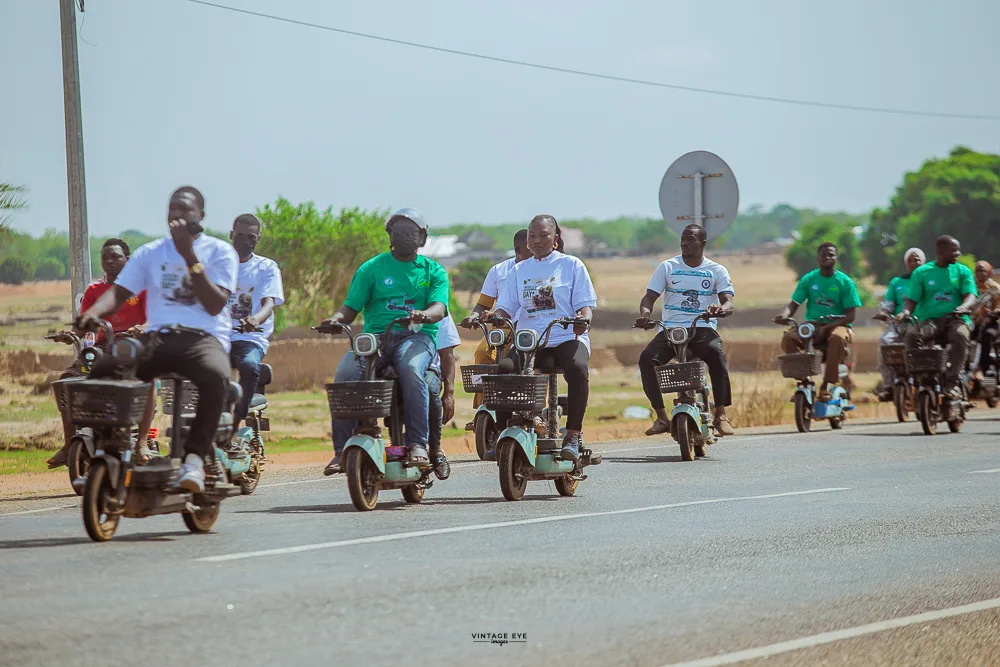
The streets of Bawku now hum with the quiet presence of electric motorcycles, marking a significant shift away from petrol-powered vehicles. This transformation, initially prompted by local restrictions on petrol motorbikes amid unrest, has accelerated since 2023, positioning electric bikes as the dominant motorised transport in the town.
Residents rely on electric motorcycles for commuting, small business operations, and daily errands, highlighting a grassroots-driven adoption rather than one spurred by major government subsidies or external funding. Riders appreciate the savings on fuel costs and recognize the impact on reducing air pollution in their community.

The recent “Ride for Clean Air” campaign mobilized hundreds, including electric bike riders, environmental activists, journalists, and officials, to raise public awareness ahead of World Environment Day. Participants used the event to emphasize that climate action is rooted in everyday practices and community choices, not just at international summits.
The CEO of M. Sniff Business Hub – Electric Bike Ghana, Hakeem Girma, pointed out that the uptake of electric motorcycles in Bawku demonstrates the potential of accessible clean technology to change transport habits. He stressed that addressing climate change begins with practical local steps like how communities travel and use energy.
Despite Ghana’s broader electric vehicle incentives, Girma noted a policy gap affecting grassroots riders. Many still face prohibitive import duties and charges on electric bikes, which restrict wider adoption beyond early users in towns like Bawku. Reducing these barriers could accelerate the transition to cleaner transport nationwide.