

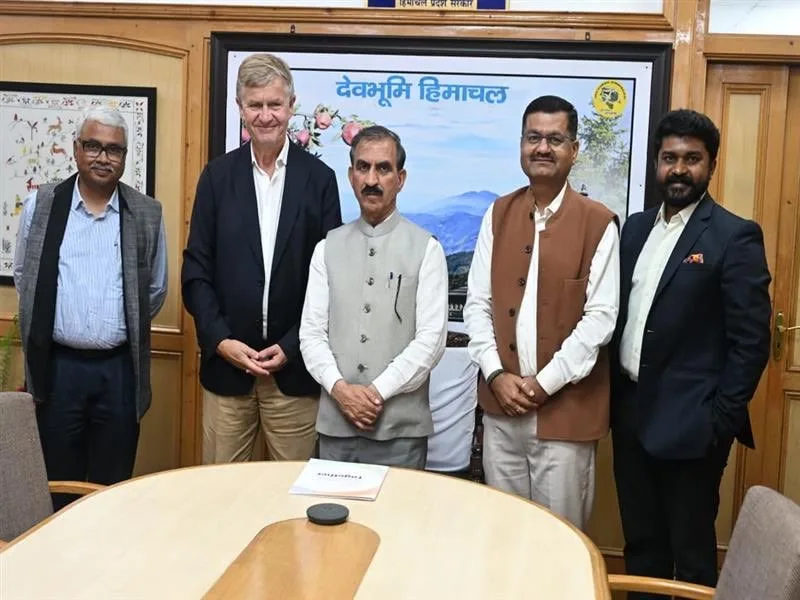
Himachal Pradesh is demonstrating how environmental stewardship can directly enhance local livelihoods through innovative climate action. The state recently launched the HIM EVERGREEN Project to help over 150,000 smallholder farmers adopt climate-smart agricultural techniques and boundary plantations, potentially generating substantial additional income for rural communities.
One notable effort involves an indigenous biochar program designed to tackle the problem of forest fires caused by pine needles. These needles, abundant on forest floors, contain flammable turpentine oil, making pine forests highly prone to fires during peak summer. The initiative will convert about 9,000 tonnes of pine needles annually into biochar, bio-oil, and wood vinegar, products that can generate high-integrity carbon credits while reducing fire risk.

The biochar project operates through collaboration between local communities, the Himachal Pradesh Forest Department, and the climate-focused company ProClime. By turning a major environmental hazard into a valuable resource, the program aims to protect the region’s sensitive Himalayan ecosystem while creating income and carbon market opportunities for residents.
The region’s forests are significantly affected by fires, with 22 percent of forest areas considered fire-prone, primarily due to dry pine needles. This strategic approach to forest management highlights the dual benefit of addressing climate threats and promoting economic development.
Former UN Environment Programme Executive Director Erik Solheim praised Himachal Pradesh for its leadership in integrating climate action with tangible local benefits. He emphasized the state’s commitment to ensuring that environmental initiatives serve immediate community interests and expressed hope that these models would expand across India and beyond.